10-09-2026



|
Getting your Trinity Audio player ready...
|
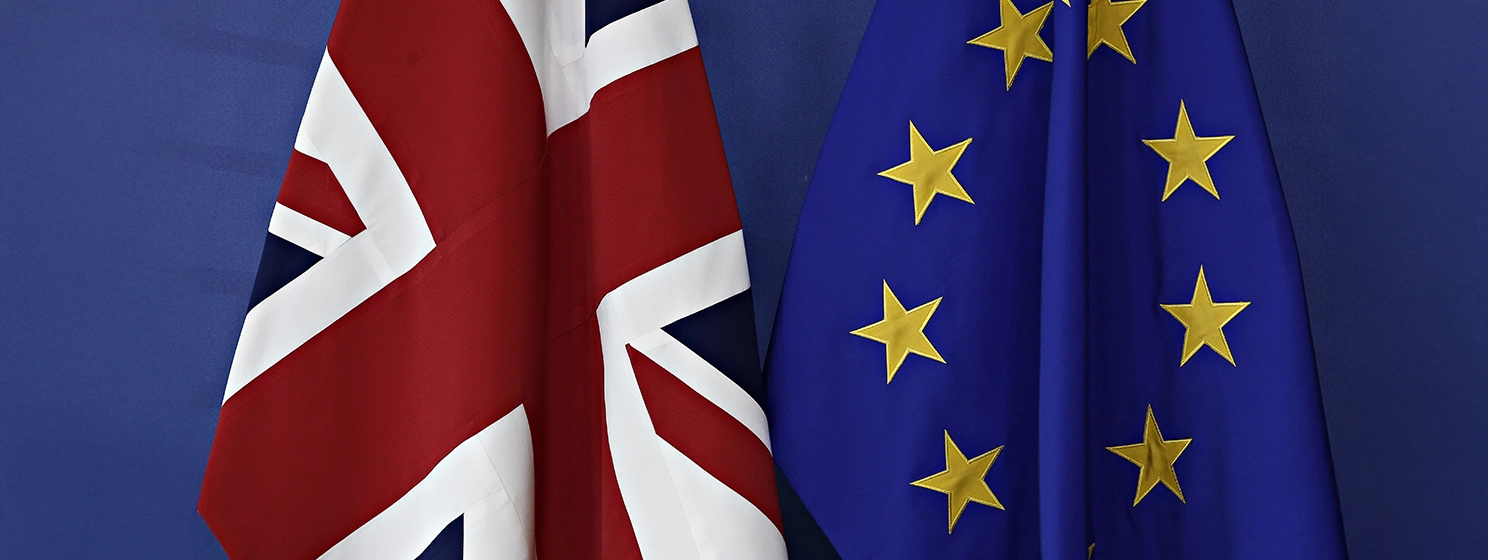
The United Kingdom and the European Union are rethinking their stablecoin rules as central bankers seek to avoid a clash with America’s more permissible regime.
- Bank of England rethinking stablecoin plans
- BoE expects ‘wrestle’ with U.S. over international stablecoin standards
- EU launches review of MiCA stablecoin rules
- European Central Bank chief likes stablecoin infrastructure, not stablecoins
- Qivalis euro-stablecoin consortium adds 25 more banks
On May 19, Sarah Breeden, Deputy Governor for Financial Stability at the Bank of England (BoE), gave a speech on Modernizing Money and Markets at the annual City Week conference in London. Breeden said the U.K. policy needs to reflect “our position as … a global financial center” by enshrining “a multi-money system that promotes competition and choice between robust forms of money.”
This includes allowing consumers “to pay with tokenized bank deposits, regulated stablecoins and, potentially, a retail central bank digital currency [CBDC].” The goal is to “lower costs and improve functionality for users … by ensuring that, through infrastructure and regulation, that all forms of money are equally robust and readily exchangeable, so that a pound is a pound, whoever issues it.”
Breeden said the BoE will publish its draft rules for ‘systemic’ stablecoins—sterling-backed payment tokens with market caps large enough to threaten the financial system should things go wrong—next month and “finalize them by year-end.” These rules could eliminate the proposed stablecoin ownership caps of £20,000 (US$26,875) for individuals and £10 million ($13.4 million) for businesses that have met with opposition from stablecoin stakeholders.
While the BoE has stressed that these limits were always intended to be temporary, Breeden said one alternative currently under consideration would be “temporary guardrails on the total amount of a coin that could be issued. Reviewed regularly, that approach could achieve the same aim at lower cost to the sector and allow a wider range of high-value payment use cases, including for corporates.”
Banking groups would be permitted to issue stablecoins “provided they do so from a non-deposit-taking, insolvency-remote group entity, similar to requirements in the U.S.” These stablecoins would need to utilize “branding distinct from the group’s deposits … to reduce confusion, and the risk of contagion to bank deposits, if holders of the group’s stablecoins—which will not be covered by deposit insurance—incur losses.”
The BoE will also allow “regulated stablecoins in sterling and foreign currencies” to participate in its Digital Securities Sandbox. Details will be released after the new stablecoin draft rules, but will include bank-issued stablecoins for wholesale use, “where the risk of confusion between the protections for deposits and for stablecoins is less acute than it is for retail customers.”
Breeden’s speech didn’t reference the other major complaint about the U.K.’s stablecoin rules, namely, the requirement for systemic stablecoin issuers to keep 40% of their fiat reserves in “unremunerated” BoE accounts. In March, Breeden told a House of Lords committee the BoE wasn’t rethinking this decision, noting that the original proposal was 100% unremunerated reserves.
But earlier this month, Breeden told the Financial Times that the 40% requirement was something the BoE “will look hard to see if we have been overly conservative in our thinking there.” Breeden acknowledged that “the industry would prefer to hold more interest-earning assets, as that goes to their bottom line.”
Breeden said the 40% figure was “based on experience of potential liquidity stress,” citing the example of USDC-issuer Circle (NASDAQ: CRCL) suffering a similarly-sized run on its reserves following the 2023 failure of Silicon Valley Bank (SVB) that caused USDC to slip its 1:1 peg with the dollar.
International standards needed … STAT!
The U.K.’s HM Treasury has partnered with the U.S. Treasury Department on a Transatlantic Taskforce to “enhance collaboration on capital markets and digital assets and other innovative financial activities.” But BoE Governor Andrew Bailey recently warned of a “coming wrestle” with America over the latter’s more permissible stablecoin standards.
Earlier this month, Reuters quoted Bailey saying stablecoins could only become “part of the architecture of payments globally … if we have international standards. Frankly, that, I think, is going to be a coming wrestle with the [U.S.] administration.”
Bailey noted that not all stablecoin issuers offer direct redemptions of their tokens for fiat currency. Token holders can be required to take an indirect route through digital asset exchanges, the reliability of which is questionable. Given the U.K.’s proposed framework, which imposed tougher rules for convertibility, Bailey says, “we know what would happen if there was a run on a stablecoin—they’d all turn up here.”
Bailey isn’t alone in his fears of a major stablecoin “bank run,” particularly when it comes to the biggest players: Circle and market-leading USDT-issuer Tether. Speaking at this week’s Digital Money Summit in London, Union Investment’s digital assets chief Christoph Hock said stablecoins more accurately resemble hedge funds, noting that Tether’s unaudited reserves include “massive” quantities of gold bars and BTC tokens, assets that will resist quick and easy redemption in a moment of crisis.
Hock, whose company has nearly $620 billion assets under management, didn’t spare USDC, warning of the “catastrophic risk” for institutional investors/asset managers in the event of a serious stablecoin failure. Hock reminded the audience that Circle required a $3.3 billion government bailout after SVB went belly-up.
MiCA review seeks stablecoin stakeholder input
On the continent, the European Commission has launched a public consultation on the functioning of the European Union’s Markets in Crypto-Assets Regulation (MiCA). The consultation is open until August 31 for members of the general public, as well as a separate, “targeted” consultation for industry stakeholders.
The latter consultation features a number of stablecoin-related questions, including the wisdom of MiCA imposing a 60% cash-in-local-banks reserve requirement for systemic stablecoin issuers. The questionnaire also wants to know if MiCA’s ban on stablecoins generating “interest or any interest‑equivalent remuneration” should be modified.
The questionnaire addresses some of the BoE concerns cited above, including whether to introduce “additional mitigation measures” that would “favor or strengthen the redemption rights of holders of stablecoins that are genuinely circulating in the EU, as opposed to redemption rights associated with stablecoins transferred to the EU in times of stress to take advantage of MiCA protections (including redemption rights).”Another query seeks to know if there might be “merit in introducing an equivalence regime for stablecoins in the EU,” including “what rights or benefits should EU issuers derive from equivalence of a third country and what rights or benefits in the EU should issuers from an equivalent jurisdiction receive in the EU?”
Lagarde likes stablecoin infrastructure; stablecoins, not so much
Dollar-backed tokens are the stablecoin market, with Artemis data for April showing the market cap of USD stablecoins hitting $322 billion, a 99.76% share of the overall total. Euro-backed stablecoins had a cap of around $619 million, a 0.21% share. Among these euro tokens, Circle’s EURC held a roughly two-thirds share with $430.6 million.
The European Central Bank (ECB) has warned that dollar-denominated tokens are a threat to the EU’s monetary sovereignty and stressed the need for euro-backed competition. But in a speech earlier this month, ECB president Christine Lagarde suggested the EU needs to pause its stablecoin approach for a moment to determine what it’s trying to accomplish.
Lagarde said stablecoins have “two distinct functions,” monetary and technological, but “to navigate clearly, we need to separate them.” And once you separate them, Lagarde says, “the case for promoting euro-denominated stablecoins is far weaker than it appears.”
Lagarde posed “a more fundamental question … do we actually need stablecoins to obtain the benefits they are said to provide? Or are we mistaking the instrument for the outcome, when what matters is the architecture underpinning which other instruments can safely emerge?”
Stablecoins have two “material” trade-offs, including the potential for ‘runs’ when confidence in the issuer wobbles and “the demand for redemption can become sudden and self-reinforcing … The promise of par redemption depends on the very market confidence that can vanish when financial stability deteriorates—and a mass redemption can accelerate that deterioration.”
The other trade-off involves monetary policy transmission. In an argument that will be all too familiar to those who’ve followed recent U.S. legislative developments, Lagarde cited the alleged threat of mass deposit flight by bank customers seeking higher yield/interest/rewards offered by digital asset platforms for holding stablecoins.
Lagarde says these two trade-offs are “significant” and “outweigh the short-term gains in financing conditions and international reach that euro-denominated stablecoins might provide.”
Lagarde isn’t totally unimpressed with blockchain technology, celebrating its potential to “build shared, cross-jurisdictional financial market infrastructure from the ground up—issuance, trading and settlement on a single platform, accessible across borders without relying on a maze of legacy intermediaries.” This potential is all the more appealing in the EU, with its hodgepodge of trading venues, central clearing counterparties and central securities depositories.
Lagarde says the stablecoin model suffers from fragility (the ability to lose its currency peg, betraying the “unconditional finality” of fiat currencies) and fragmentation (“multiple platforms and no common anchor for convertibility”). Lagarde suggests “tokenized commercial bank deposits” may ultimately “prove preferable to stablecoins for many wholesale use cases.”
Summing up, Lagarde said, “our task is not to replicate instruments developed elsewhere, but to build the foundations and the infrastructure that serve our own objectives, so that we can harness the benefits of innovation without importing the fragilities.”
Qivalis stablecoin bankers… Assemble!
Lagarde is famously supportive of the digital euro, which might more accurately be called the digital UFO, in that it often seems more mythology than tangible reality. And while Lagarde isn’t wild about privately issued euro-backed stablecoins, that’s not stopping some of the EU’s biggest banks from giving it their best shot.
As of last month, the Amsterdam-based Qivalis consortium had signed up 12 major banks, but that number has since leaped to 37 from 15 different countries (full list available here). New members include ABN Amro, the Bank of Ireland, and Luxembourg’s state-owned Spuerkeess, joining original members including BNP Paribas, ING (NASDAQ: ING), and Raiffeisen Bank.
Qivalis trumpeted its new members in an X post claiming that it’s “not just building a euro stablecoin; we are laying the European financial rails of the future.” Qivalis said its member banks are “united behind one mission: a native, regulated euro in the on-chain financial system, backed 1:1.”
Dutch financial media quoted Qivalis CFO Floris Lugt saying the expansion represented a “revolutionary moment,” adding that blockchain tech’s potential “has consistently gone unrealized because banks did not support it. That is about to change.”
Lugt said Qivalis member banks would contribute capital and help to develop applications to make use of the consortium’s new (as yet unnamed) token, including in cross-border transfers and settlement of tokenized securities. The project is still awaiting its approval from De Nederlandsche Bank as an electronic money institution (EMI), but hopes to launch its token in the second half of 2026.
Watch | Stablecoins: The 5-question strategic test with BCG’s Dr. Bernhard Kronfellner