10-17-2026



|
Getting your Trinity Audio player ready...
|
America’s road to a fully regulated digital asset market has been cleared of a few pebbles, but the biggest boulder blocking this path seems to get larger by the day.
- CLARITY’s illicit finance language wins support of (some) cops
- Trump’s crypto ethics becoming too big for even GOP to ignore
- Dems vow to put Trump crypto back in its cage
- Jurisdictional squabbles complicate Strategic Bitcoin Reserve plans
- Is BTC coming to Trump Accounts?
- Trump says ‘crypto operators should thank me,’ SEC says ‘thank us too’
- Kraken wins $22 million award from former auditor Mazars
The Senate floor may be quiet while (most) senators are home visiting their constituents, but behind-the-scenes negotiations on issues preventing passage of the chamber’s digital asset market structure legislation (CLARITY Act) have borne some seemingly minor fruit.
One of the hurdles blocking CLARITY from advancing to a Senate floor vote is the ‘illicit finance’ issue, aka how much legal liability should developers of noncustodial decentralized finance (DeFi) platforms face when said platforms are used by criminals to facilitate crimes or launder the proceeds of illegal activity.
On June 29, the White House hosted its second meeting with law enforcement agencies, who (along with prosecutors) have complained that CLARITY’s DeFi language will make it harder for them to investigate and prosecute cases involving digital assets. The first meeting failed to alleviate these concerns, but the second meeting reportedly focused on promoting other sections of CLARITY that advocates insist will assist crypto-related prosecutions.
Whatever was discussed, it appears to have had some sway on at least some of those in attendance. On July 1, the National Organization of Black Law Enforcement Executives (NOBLE) sent a letter to the Senate’s Republican and Democratic leaders saying the group “formally endorses” CLARITY.
NOBLE said its review of CLARITY concluded that the legislation “contains several provisions that would provide law enforcement with meaningful new capabilities while preserving longstanding criminal enforcement authorities.” But NOBLE went on to say that “effective implementation” of CLARITY “will be essential to realizing the full benefits of any new regulatory framework.”
On July 3, a less-committed letter was sent by the Major County Sheriffs of America (MCSA), which told the chair and ranking member of the Senate Banking Committee that the group “is now neutral” on CLARITY.
That’s a shift from the MCSA’s position in May, when it wrote to the same Banking leaders to express its concerns that “criminals will be emboldened to use digital assets to avoid accountability and hide illicit gains” if CLARITY’s illicit finance language wasn’t tightened.
The MCSA’s latest letter says that, while it believes “there remains an opportunity to further strengthen the legislation in ways that support responsible innovation and the practical needs of state and local law enforcement,” it wants to ensure that “investigators have both a voice in shaping policy and the capabilities needed to carry it out.”
Translated, that means the MCSA “must have the tools, partnerships and resources necessary to identify offenders, trace illicit proceeds, recover assets, and protect victims.” The MCSA also wants Congress “to provide state and local law enforcement with a formal role” in “shaping any legislative, regulatory, and policy recommendations.”
The June 23 missive from the bulk of the cops/prosecutors opposed to CLARITY singled out coin mixing platforms like Tornado Cash for “facilitating the movement or concealment of illicit funds.” On July 2, Tornado Cash co-founder Roman Storm, who’s currently appealing his conviction from last August for conspiracy to operate an unlicensed money-transmitting business, cited the ongoing threat to DeFi devs in a pitch to raise funds for his appeal.
Storm tweeted that “the gov’t theory in my case isn’t about me. It’s a template. Under US v. Storm, ‘money transmitting’ no longer requires custody or control of funds. Publishing code that others use is enough.” Storm offered a long list of developers (“DeFi or not”) who will be “held to a duty to ‘stop’ what is technically unstoppable.”
Regardless, crypto stakeholders were quick to applaud the MCSA’s shift, with Coinbase (NASDAQ: COIN) CEO Brian Armstrong calling it “huge”. But a much ‘yuger’ hurdle remains, and clearing it will likely be the real test of whether CLARITY makes it over the finish line.
When the president does it, that means it’s not illegal
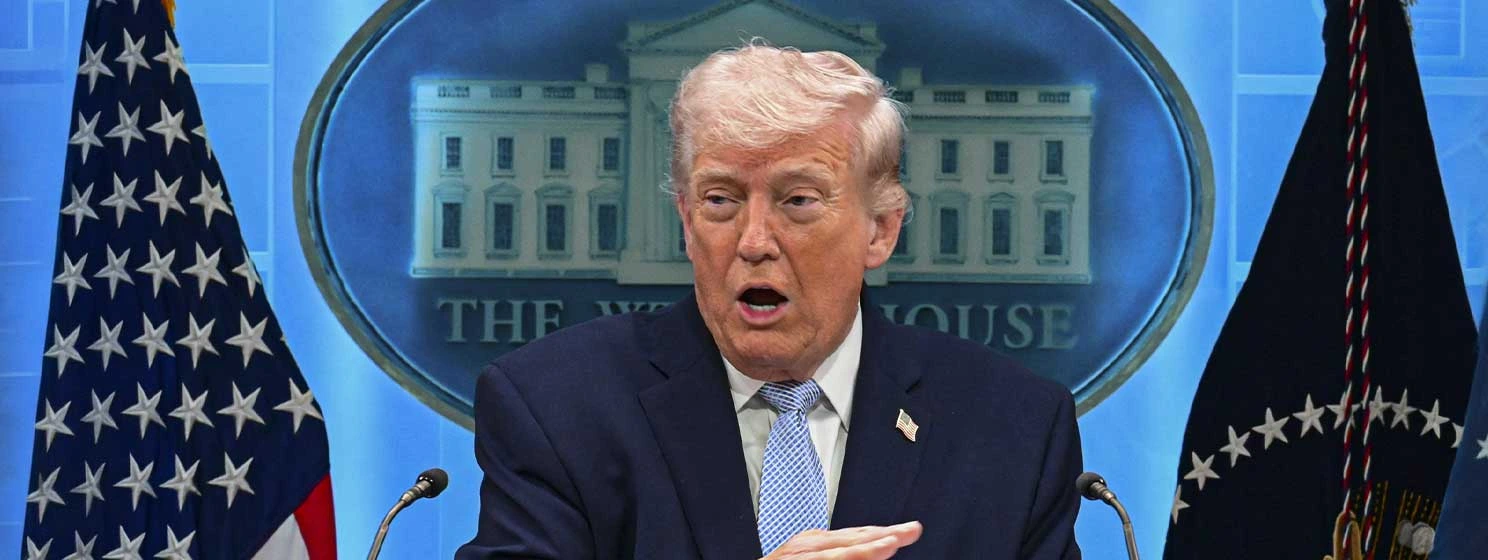
Last week’s financial disclosure by President Trump, showing well north of $1 billion in income from crypto ventures in 2025, has dramatically increased public scrutiny of the Trump family’s reliance on crypto for the bulk of its income since the president returned to the White House in January 2025.
On July 4, the New York Times reported on Nansen data showing individuals who bought his $TRUMP memecoin (released just days before he took his second oath of office) have collectively lost over $3.8 billion due to the token’s 97% plunge from its initial price peak. Meanwhile, the president reported $635 million in ‘royalties’ from the token, thanks to him earning revenue from all $TRUMP transactions regardless of the token’s value.
Nansen claims that two-thirds of $TRUMP buyers are in the red, while most of those in the black bought the token at prices below $1 within hours of its launch. Nansen said those early buyers are up $4 billion, enjoying “enormous gains while the broad retail majority absorbed the losses.”
Similarly, Nansen found that 85% of the nearly 27,000 digital wallets it identified as holding WLFI, the ‘governance’ token of the Trump-linked World Liberty Financial (WLF) project, were in the red. That mirrors the token’s 82% decline since it became available to retail customers via digital asset exchanges last September.
The White House has aggressively pushed back on the perception that Trump’s crypto profits came at the expense of those who voted for him. Trump himself pleaded ignorance of the enormity of his crypto profits in an interview with CNBC’s Joe Kernen the day after his disclosure was released. But he also claimed there was “nothing illegal” if he did know how his money was being invested during his time in office.
Queried by CBS News as to whether there was “an appearance problem” with the president’s ability to shape crypto policy while reaping enormous profits from crypto ventures, Treasury Secretary Scott Bessent struck a dismissive tone. Bessent said Trump’s second term was “an innovation presidency. So whether it’s digital assets, whether it’s AI, whether it’s everything that is going on in the tech ecosystem … all Americans are benefiting from that.”
But former White House economic advisor Stephen Moore was far less dismissive during a weekend appearance on CNN. Moore said “people wanted to believe in these coins. I think the president, in good faith, really believed this would be a good investment, and it turned out not to be one.”
And Fox News commentator Dana Perino unfavorably compared Trump’s crypto profits with conservatives’ longstanding criticisms of Hunter Biden’s alleged profiteering during his father’s term as president. Perino said that “if [the White House thinks] this issue is not permeating across the country with people going, ‘Huh wait, what?’ They’re not exactly on the most solid ground here.”
The Wall Street Journal’s editorial board accused the Trump family of “profiting off the Presidency in ways that demean the office” and said, “Americans, and especially his supporters, deserve better from this or any President.” The op-ed warned that if Democrats reclaim control of either the Senate or the House of Representatives following November’s midterm elections, “they will have a field day probing the Trump family deals.”
Okay, but is corruption really so bad when it’s you doing it?
Dems’ ethics resolve hardening?
Following the disclosure, Bloomberg reporter James Seyffart tweeted a screenshot of a media headline calling Trump the “Biggest US Crypto Moneymaker,” adding that this type of coverage “likely mean(s) that Clarity isn’t getting done without serious ethics language for Trump/politicians. The optics are just so objectively terrible. I have to imagine that even pro-crypto dems are having a hard time ignoring this.”
A host of Democrats have indeed been highly vocal regarding both the impropriety of Trump’s crypto profits and the need to ensure CLARITY has ‘ethics’ language that would restrict or outright ban elected officials and their families from crypto profiteering. Rep. Seth Magaziner (D-RI) tweeted that “when Dems are in the majority we are going to ban this bullshit.”
Sen. Angela Alsobrooks (D-MD), who helped craft a bipartisan fix to CLARITY’s stablecoin rewards debate (which sadly isn’t dead yet), called Trump and his family “the most corrupt we’ve ever seen in the White House.” Alsobrooks added that “we desperately need legislation that includes an agreement of ethics that would apply to the president, vice-president, and all of [Congress].”
Both Alsobrooks and fellow Senate Banking Committee member Ruben Gallego (D-AZ) voted to advance CLARITY out of committee with the caveat that their floor votes would depend on how the ethics issue is resolved. On July 1, Gallego tweeted that Trump “is using the presidency to profit off the American people. I’ll keep doing everything I can to crack down on his corrupt crypto dealings.”
On July 3, Sen. Kirsten Gillibrand (D-NY) issued a statement renewing her call for Congress to “bar all elected officials, and their spouses, from issuing or sponsoring their own digital assets.” Gillibrand said this was a bipartisan no-brainer, and CLARITY “must include ethics reforms that prohibit members of Congress, the president, and their spouses from cashing in on their office.”
The Senate will reconvene on July 13 but will break again on August 7 for its traditional summer holiday. That’s not a lot of time to address CLARITY’s lingering issues, especially given the list of other pressing matters on their plate. The growing consensus is that if CLARITY isn’t sent to Trump’s desk before that August break, the bill might miss its only remaining opportunity for passage in the current Congress.Humorous aside: over the weekend, Coinbase’s AI agents pushed out a hallucinated promo for the company’s prediction market offering that provided the final score and scoring details from a FIFA World Cup match that had yet to take place. On Monday, White House crypto advisor Patrick Witt tweeted: “Hey @coinbase, when will the Clarity Act pass?”
Strategic Reservations
Trump is having similar problems transitioning his Strategic Bitcoin Reserve (SBR) and Digital Asset Stockpile into anything beyond mere concepts, as outlined in an executive order issued 15 months ago. In April, White House advisor Witt promised “a big announcement” regarding the SBR, following that up in May with a claim that there’d been “a breakthrough” on the SBR front, details of which would be forthcoming in “an announcement” soon.
Since then, crickets. At least, no positive crickets. On Monday, Bloomberg reported on an SBR oversight turf war between the Treasury and Commerce departments. The fight was reportedly sparked by concerns about whether the Treasury is legally allowed to indefinitely store all the BTC confiscated by/forfeited to the federal government, given the token’s inherent price volatility.
The Department of Justice (DoJ) issued a statement saying its Office of Legal Counsel is trying to “determine legally available options to accomplish the president’s policy of establishing” the SBR. The White House issued an anodyne statement about continuing to “evaluate the best structure” for both the SBR and the Digital Asset Stockpile (made up of seized/forfeited non-BTC tokens).
It probably doesn’t help that Treasury’s Bessent and Commerce Secretary Howard Lutnick are known to dislike each other, in part because Lutnick originally wanted the Treasury job. Bessent reportedly called Lutnick “an idiot” to his face during an Oval Office meeting, comments that Trump reportedly got a kick out of.
BTC in Trump Accounts?
Monday saw Trump invite reporters into the Oval Office to announce the official launch of Trump Accounts, the savings plan for American babies born between January 1, 2025, and December 31, 2028. The accounts will be seeded with $1,000 in government cash, while parents can personally top up these accounts by $5,000 per child per year.
The feds say the funds in the accounts “will be invested in a diversified investment vehicle designed to maximize long-term growth while minimizing risk. Additional investment options will be added.” To start, this ‘vehicle’ includes five index funds “selected to provide diversified exposure across major segments of the financial markets while keeping investment costs low.”
On Monday, Trump was asked whether Trump Accounts would one day include BTC. He didn’t directly answer, instead launching into a ‘weave’ on how he became “a big crypto fan” because “if we don’t have it, China’s gonna have it. And they would like to have it.”
However, at one point in his comments, Trump described how “massive” a certain industry had become—whether he was talking about crypto or AI was unclear—then referred to the kids assembled in the Oval Office as Trump Account props, saying, “I’ll give you a little inside information.”
Trump then queried ‘Paul’—presumably Paul Atkins, chairman of the Securities and Exchange Commission (SEC), and ‘Scott’ (presumably Bessent)—on whether Trump was “allowed” to discuss something apparently sensitive.
Trump then claimed that “I think you’re going to see a contribution made by those because they’re making tremendous amounts of money.” Again, given the meandering nature of his ten-minute response, it’s unclear whether ‘those’ is a reference to crypto or AI operators donating even more millions of dollars to Trump-favored causes, possibly including Trump Accounts.
A clue may have come on July 2, when Treasury announced that it and the Internal Revenue Service (IRS) would “accept large philanthropic contributions of readily tradable public company stock to support Trump Accounts … consistent with the donor’s instructions, applicable law, and Treasury guidance.” Since most large AI firms have yet to go public, this could signal a greater payday coming from the crypto camp.
Trump’s SEC preps ‘safe harbor’ crypto rules
Trump made a rather candid admission during his Oval Office scrum, starting with his claim that the Biden administration was “very violently against” crypto. Trump said Biden’s people “were putting people in jail” and “it’s amazing that [crypto survived that onslaught.”
Trump then claimed that when he made his pro-crypto pivot during the 2024 election campaign, Biden suddenly became “totally pro crypto. They dropped all investigations of everybody. They allowed people to come out of jail.” Trump added that “every time I see a crypto guy that, where they dropped an investigation, I said ‘You’re lucky I’m president.’”
In fact, it was about a month after Trump was sworn into office that the SEC commenced its wholesale abandonment of crypto-related enforcement actions, including many firms that had made it rain financially for Trump-related campaigns/causes. Trump also pardoned Silk Road operator Ross Ulbricht during his first week in office, allowing Ulbricht to walk free after 11 years behind bars.
And it was in April 2025 that the Department of Justice announced it was disbanding its National Cryptocurrency Enforcement Team (NCET) as part of its new ethos of ‘ending regulation by prosecution.’ The NCET was launched during the first year of Biden’s presidency, so Trump did at least get it correct that crypto operators who were under investigation owe him a debt of gratitude.
Trump’s Oval oration singled out SEC chair Atkins as “really good” and “the best man for the job.” The following day, Atkins issued a statement on the SEC’s 2026 Regulatory Agenda and its mission statement of “embracing innovation and new technology.”
Among the items on the agenda is one involving ‘crypto assets’ that could see the SEC “propose rules relating to the offer and sale of crypto assets, potentially to include certain exemptions and safe harbors, to help clarify the regulatory framework for crypto assets and provide greater certainty to the market.”
The SEC has previously spoken at length regarding its proposed ‘innovation exemptions’ that could allow token projects to raise money without registering in advance with the SEC, tokenize equities, and a whole lot of other perks that would have been out of the question under the previous administration. Tuesday’s announcement means these proposed rules could be coming this month.
In his statement, Atkins said: “To deliver on President Trump’s goal to ensure that the United States is the crypto capital of the world, we are embracing innovation to bring more products onshore, creating clear rules of the road for capital raising with crypto assets, and providing clarity as to how market participants can custody and facilitate trading of tokenized securities onchain.”
Kraken v Mazars v cha-ching
The SEC dismissed its enforcement action against the Kraken exchange in March 2025, deciding to forgive and forget the civil charges of selling unregistered securities filed against the digital asset exchange in November 2023.
On July 7, Arjen Sethi, co-CEO of Kraken’s parent company Payward, issued a blog post in which he detailed the company’s request for the Delaware Court of Chancery to enter a final judgment against Mazars USA, Kraken’s former auditor. Mazars abandoned its “nearly completed” audit of Kraken’s 2022 financials in December 2023, one month after the SEC’s charges were filed.
Sethi claims that at the time of that withdrawal, Mazars “confirmed in writing that they had no disagreement with our management, no concerns about our integrity, and that they had found no fraud.” Sethi claims Mazars justified its withdrawal due to “uncertainty and risk from legal developments,” including the SEC charges.
Sethi claims “Mazars was pressured” into “walking away from an industry that had become politically expensive to serve,” leaving Kraken as “the collateral damage.” While the SEC charges were later dismissed, “the damage from losing our auditor did not.”
Sethi said that when an auditor abruptly withdraws prior to an audit’s completion, “you inherit a cloud you did nothing to create, and you pay to clear a name that was never dirty.” Payward therefore went to court and convinced an arbitrator to award the company $22 million in compensation. Payward is now trying to force Mazars to pay up.
Sethi closed his post with a plea for Congress to pass the CLARITY Act. While Kraken founder Jesse Powell donated $1 million to Trump’s 2024 campaign and Kraken donated a further $2 million to pro-Trump groups in September 2025, Sethi said “none of this is about political party [sic].” Sethi urged “congressional leaders from both sides of the aisle” to “come together” and pass CLARITY ASAP. Never know, Kraken might sue if they don’t.
Watch | Teranode & the Future of AI: Insights from Martin Coxall