11-26-2026



|
Getting your Trinity Audio player ready...
|
TL;DR: North Korea’s reported laundering of tokens recently stolen from Binance is a complicated process that authorities are struggling to get a hold of, especially since not all the crypto players play by the same rules. While stablecoin issuers froze nearly $3 billion of the stolen funds and courts in the United States and Abu Dhabi have issued orders to recover more, services like THORChain and Kruw have declined to intervene, and Tether’s recovery process comes with fees of its own.
Key Takeaways:
- Binance hack laundromat churning away as North Korea’s hackers swap stolen tokens across thousands of wallets, bridges and memecoins
- Courts, DoJ talking tough but who’s listening?
- Tether will freeze USDT … if the price is right
- XXI Capital makes a billion, loses a billion, generates zero revenue as BTC’s slide wipes out its Q3 paper profit
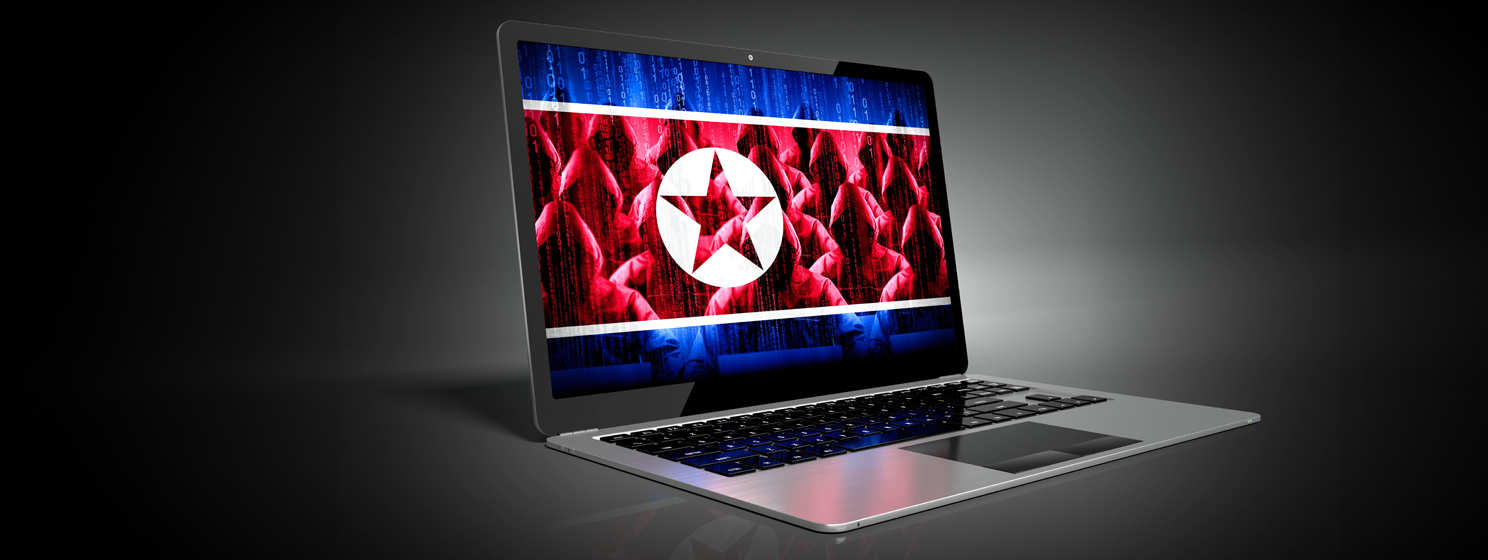
North Korea’s state-sponsored hacking hordes reportedly continue to launder the proceeds illicitly obtained via last month’s record-setting $6.3 billion hack of the Binance digital asset exchange. This week, blockchain analysts Elliptic offered further details on these “complex and clearly automated” laundering moves, “spanning more than 27,000 wallets, 16 blockchains and about 55 services.”
The hack made off with a variety of tokens that the hackers have been furiously swapping for other tokens using a variety of cross-chain bridges, coin mixing and ‘coinjoin’ services. About $510 million worth of XRP, TRX and SOL tokens have been swapped for other assets, primarily BTC.
Between November 17-20, a total of ~488,000 ETH was on the move, much of it funneled through the THORChain bridge (whose operators have declined to intervene) to obfuscate its origins and swap for BTC.
At least 3,930 of this BTC worth $247 million has been ‘joined’ (pooled with other users’ tokens into a single transaction). “Almost all” of these coinjoins were coordinated by Kruw, the noncustodial coordinator for Wasabi Wallet users. As with THORChain, the individuals behind Kruw have taken a hands-off approach to this activity.
Earlier this month, Elliptic revealed that North Korea’s launderers were minting worthless memecoins—named FUK, OLCCL, MEILI, MMLI, DABI and SINU—that they then paired with a real asset via decentralized exchange (DEX) liquidity pools. One set of wallets pays stolen tokens into the pool, receives the new memecoins in return, then sells those memecoins back into the same pool and withdraws the original asset, further obfuscating the trail of the stolen tokens.
As Elliptic put it: “Nobody outside the laundering operation buys [memecoins], and their price is whatever the launderers choose to set. That makes them useful as a container, allowing stolen funds to go in on one side of a liquidity pool and come out on the other … A wallet whose history shows trades in a new memecoin looks like a speculator rather than a launderer, unless someone checks where its money came from.”
Elliptic says around $2.22 billion worth of stolen tokens “remains in addresses linked to the theft.” The majority of these hot tokens have yet to be cashed out, but Elliptic expects the swapping to continue for some time before the hackers attempt to cash out via centralized exchanges or over-the-counter (OTC) brokers.
Courts, lawmen talking loud, but who’s listening?
Nearly $3 billion of the tokens stolen from Binance were frozen by their centralized issuers, aka stablecoin firms like Tether (USDT), Circle (NASDAQ: CRCL) (USDC), Ripple Labs (RLUSD), World Liberty Financial (USD1), and a few others. A total of $3.46 billion of the stolen tokens were stablecoins, but some $776 million worth of these stablecoins (nearly all of it USDT) was swapped for non-freezable tokens before issuers could act.
On November 18, Binance announced that it had been “granted a court order in the Abu Dhabi Global Market (ADGM) Courts to support the recovery of assets connected” to the theft. Binance noted that “in some cases, issuers, exchanges or other partners request a formal court order before frozen assets will be released, transferred or returned. The court order Binance has obtained assists in creating that pathway.”
Binance was represented in Abu Dhabi by Gibson Dunn, and the law firm’s M. Kendall Day said it has “secured proprietary injunctions and delivery-up orders on behalf of Binance to recover what was taken. Just as significant is how the orders will work in practice: they can be served via the blockchain, and the market will be notified of a constantly updating ‘living list’ of 26,000 wallet addresses identified as holding stolen assets, enabling those assets to be frozen rapidly even as they are laundered at pace.”
The Abu Dhabi court has scheduled a further hearing for December 1 at which it will consider whether to maintain the injunction, and on what terms.
On November 12, the U.S. Department of Justice (DoJ) announced that it had obtained “court-authorization to seize or restrain in excess of $1.2 billion” of the stolen/frozen Binance funds. On November 23, the DoJ announced that it had filed a civil claim to recover $1.1 billion worth of USDC representing “proceeds and laundered funds from the cryptocurrency theft from Binance.”
Binance deputy general counsel Dugan Bliss told Reuters that the exchange “will continue using every lawful tool available to trace, freeze and recover stolen assets, support our partners in returning funds where possible, and keep those assets out of the hands of the attackers.”
Now how much would you pay?
Curiously, Reuters reported that while stablecoin issuers including Circle and WLF were named in the court order, Tether was not. Bliss said Binance was working with Tether on this issue, and a Tether spokesperson added that “in consultation with the relevant authorities, we will work directly with Binance in respect of reissuing the tokens.”
On November 24, Bloomberg reported on how both Tether and Circle “reacted unusually quickly to freeze accounts” linked to the Binance hack. The article noted Circle’s historic reticence to respond to hacks in the absence of a court order, “a method so structured and time-consuming that the judge’s decision could be irrelevant by the time it came.”
Circle quietly changed its freezing policy this spring to allow it to act on government requests/orders rather than wait for courts to get involved. Bloomberg reported that Circle’s quick response to the Binance hack came following “requests from Binance as well as the U.S. government.” Binance took a $100 million stake in Circle in September, which likely didn’t hurt Circle’s response time.
Bloomberg also noted that Tether “sometimes charges a fee to eventually return” frozen USDT. The article cites the example of Singapore-based digital asset exchange Bittok, the victim of a June 2020 hack that made off with $50 million.
The entity that acquired Bittok post-exploit is still waiting to reclaim the USDT stolen via this hack, in part due to a Tether lawyer informing the exchange that a 20% “reissuance fee” would be applied to any USDT returned. A Tether spokesperson told Bloomberg that such fees help fund the reissuing process as well as any accompanying legal costs.
Tether’s published ‘tokens recovery’ policy says it requires those making recovery requests to become a ‘verified user’ (aka an individual/entity to which Tether directly issues a minimum of $100,000 worth of USDT, so basically no retail users).
Tether also doesn’t respond to requests for recovery below $1,000. For recovery requests above that threshold, Tether “will charge you a fee of up to 10% of the recovery amount or $1,000 (whichever is greater).”
Bloomberg cited other examples in which victims fared worse than Bittok, including a Berlin resident who lost $75,000 and claims Tether ignored his request to freeze while the wallet containing the stolen tokens was emptied. Bloomberg said Tether CEO Paolo Ardoino “appears to have blocked” the Berliner.
An India-based advocate who has attempted to help USDT holders in Russia, Germany, and Spain recover their stolen tokens said none of these clients’ appeals to Tether proved successful. Tether has “nothing to lose, to be very frank. At the end of the day, they have control of the assets.”
XXI x’s out Q3 profit
Tether has plenty to lose from its 71% stake in Twenty One Capital (NASDAQ: XXI), the BTC digital asset treasury (DAT) firm that reported ownership of 43,514 tokens as of September 30. Given the modest rise in BTC’s price during Q3, XXI reported a profit of nearly $1.1 billion, based on each BTC being valued at $83,700. That price is roughly $25,000 more than BTC was worth as of mid-Wednesday, meaning XXI’s BTC treasury is worth about $1.1 billion less today.
XXI ‘bought the dip’ twice in November, adding another 327 tokens to its treasury. But the November 16 acquisition of 154 tokens was done at an average price of ~$64,800, meaning those tokens are also underwater. The November 20 acquisition of 172 tokens was done at an average price of $58,054, so those are currently trading around par (at least, for the moment).
XXI’s entire reason for being is buying BTC and sitting on the tokens with the expectation/hope that their value will exponentially increase in perpetuity. Their Q3 report makes for interesting reading, given that it’s one of the rare financial reports that doesn’t contain a revenue segment. As in, there isn’t any.
As a result, XXI booked an operating loss of $4.8 million in Q3, apparently due to salaries paid to the people who sit and watch BTC’s price fluctuations. And since BTC is tanking, XXI’s share price has fallen from around $6.75 at the end of Q3 to its Tuesday close of $4.27.
As our own Kurt Wuckert Jr. has repeatedly observed, DATs are dumb. Don’t be dumb.
FAQs:
How much was stolen from Binance?
About $6.3 billion in tokens, making it a record-setting hack. North Korea’s state-sponsored hackers are behind the theft.
How are the hackers laundering the stolen tokens?
Through a complex, automated process spanning more than 27,000 wallets, 16 blockchains, and about 55 services, according to Elliptic. Methods include cross-chain bridges like THORChain, coinjoins coordinated by Kruw, and swaps through self-minted memecoins in DEX liquidity pools.
How much of the stolen funds has been frozen?
Nearly $3 billion, frozen by stablecoin issuers such as Tether, Circle, Ripple, and World Liberty Financial. However, about $776 million in stablecoins, mostly USDT, was swapped for non-freezable tokens before issuers could act.
What are authorities doing to recover the funds?
Binance obtained a court order in Abu Dhabi to support asset recovery, with a further hearing set for December 1. The U.S. Department of Justice has secured authorization to seize or restrain over $1.2 billion and filed a civil claim for $1.1 billion in USDC.
Why is recovering the stolen tokens so difficult?
Not all crypto players follow the same rules. THORChain and Kruw have taken a hands-off approach, and Tether can charge fees of up to 10% or more to return frozen USDT.
Watch: Can we trust AI? How blockchain and IPv6 could fix accountability