10-13-2026




|
Getting your Trinity Audio player ready...
|
The United Arab Emirates (UAE) Ministry of Defense is planning to roll out digital transformation and artificial intelligence (AI) projects as part of its efforts to modernize the country’s operational systems, Gulf News reported.
The initiative was launched following directives from the UAE’s leadership. It will be overseen by the Office of the Assistant Minister of State for Digital Transformation, Technology and Artificial Intelligence, as well as strategic partners.
The ministry announced that the projects aim to accelerate the integration of advanced digital technologies within the defense sector, enhance efficiency, and align the sector’s operations with the Gulf country’s goals for a more agile and responsive digital government as part of the UAE Digital Transformation Strategy 2031.
The program will emphasize the use of AI for planning, data analysis, and the development of advanced systems to improve resource management. Additionally, it seeks to boost the ministry’s capacity to respond quickly to technological challenges, both domestically and internationally.
According to the ministry, these initiatives are part of a broader effort to upgrade digital infrastructure, integrate AI systems across the defense operations, and develop national capacities for future digital transformation plans. It claimed that the projects are designed to strengthen the armed forces’ standing among top institutions that are adopting emerging technologies.
UAE to move 50% of government services to AI by 2028
On April 23, His Highness Sheikh Mohammed bin Rashid Al Maktoum, Vice President and Prime Minister of the UAE and Ruler of Dubai, announced a major digital shift in the government of the UAE.
Writing on his official X account, Sheikh Mohammed said that the UAE will transform half of its government services and operations to autonomous AI within two years, following the directives by President His Highness Sheikh Mohamed bin Zayed Al Nahyan.
“AI is no longer a tool. It analyses, decides, executes, and improves in real time. It will become our executive partner to enhance services, accelerate decisions, and raise efficiency,” Sheikh Mohammed said. “This transformation has a clear timeline. Two years. Performance across government will be measured by speed of adoption, quality of implementation, and mastery of AI in redesigning government work.”
He added that federal employees will be trained to master AI, and the implementation will be overseen by Sheikh Mansour bin Zayed Al Nahyan, Vice President, Deputy Prime Minister and Chairman of the Presidential Court, together with a dedicated task force to be chaired by Mohammad Al Gergawi, Minister of UAE Cabinet Affairs.
The project focuses on reimagining government policies, processes, and procedures in line with AI advancements. By enabling smart systems to undertake tasks proactively and accurately, the UAE seeks to reduce operational costs while boosting productivity by providing faster, more efficient public services. The project will be implemented in phases across ministries and federal entities, with continued performance and impact assessment.
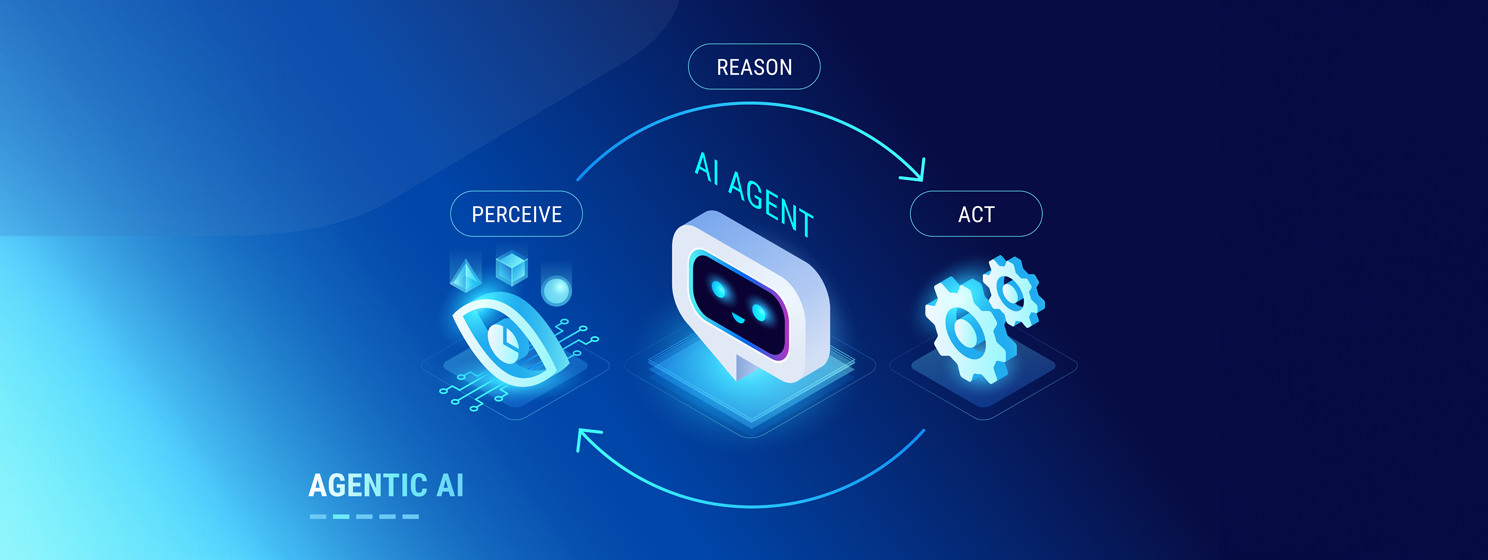
The decision to implement agentic AI across government operations builds on the UAE’s two decades of digital transformation. It started with the early adoption of eGovernment and the modernization of government-integrated systems, such as the UAE Pass identity verification platform—efforts that introduced proactive, data-driven service delivery through Government Services 2.0.
In 2017, the UAE became the first country globally to appoint a Minister of State for Artificial Intelligence and to launch its Artificial Intelligence Strategy 2031 under the UAE Centennial 2071 vision. The establishment of the Ministry of Artificial Intelligence, Digital Economy, and Remote Work Applications in 2020 further reinforced this commitment to a future powered by artificial intelligence and innovation.
In order for artificial intelligence (AI) to work right within the law and thrive in the face of growing challenges, it needs to integrate an enterprise blockchain system that ensures data input quality and ownership—allowing it to keep data safe while also guaranteeing the immutability of data. Check out CoinGeek’s coverage on this emerging tech to learn more why Enterprise blockchain will be the backbone of AI.
Watch: Cybersecurity fundamentals in today’s digital age with AI & Web3