10-11-2026



|
Getting your Trinity Audio player ready...
|
As artificial intelligence (AI) reshapes industries worldwide, the Philippines’ Information Technology and Business Process Management (IT-BPM) sector is fast becoming the country’s defining test for the future of work. The sector now employs close to 2 million Filipinos and contributes more than $40 billion in annual revenue, overtaking even OFW remittances as a key economic driver. But beneath those numbers lies a more urgent question: Can the country move fast enough to survive the AI era?
- IT-BPM: A growing pillar of the Philippine economy
- Beyond call centers: New opportunities in IT-BPM
- How companies can prepare their employees for AI
- Shifting the narrative: Embracing change in job roles
- Building the right infrastructure: Investing in digital solutions
- Identifying challenges for a competitive edge in the global market
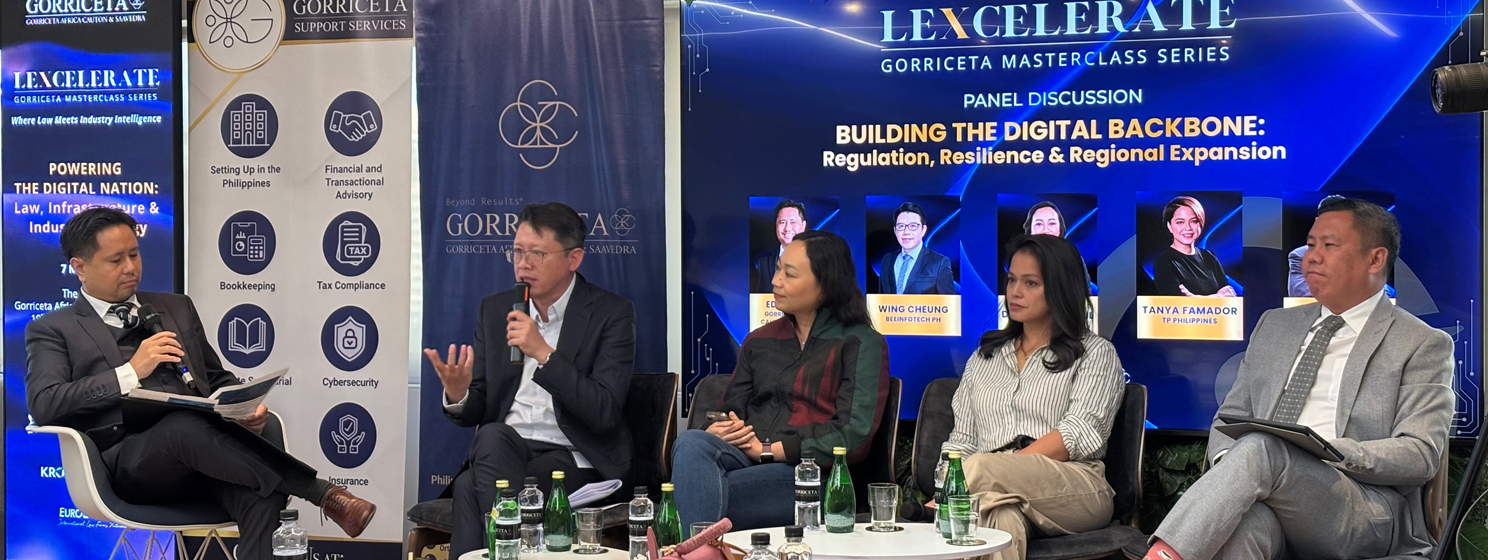
That question loomed large at a recent Gorriceta Africa Cauton & Saavedra masterclass attended by business leaders, legal experts, and technology executives, where a key theme emerged: AI is accelerating the transformation of the Philippines’ outsourcing industry.
For years, the Philippines has built its global reputation on voice services and customer support. Today, however, industry leaders argue that relying solely on English proficiency and labor-cost advantages is no longer enough. Countries like Vietnam and Malaysia are rapidly strengthening their digital infrastructure and workforce capabilities, while AI is automating many of the repetitive tasks that once drove outsourcing growth.
According to the Information Technology and Business Process Association of the Philippines (IBPAP) Vice Chairperson Nicki Agcaoili, the industry is now entering a decisive transition period.
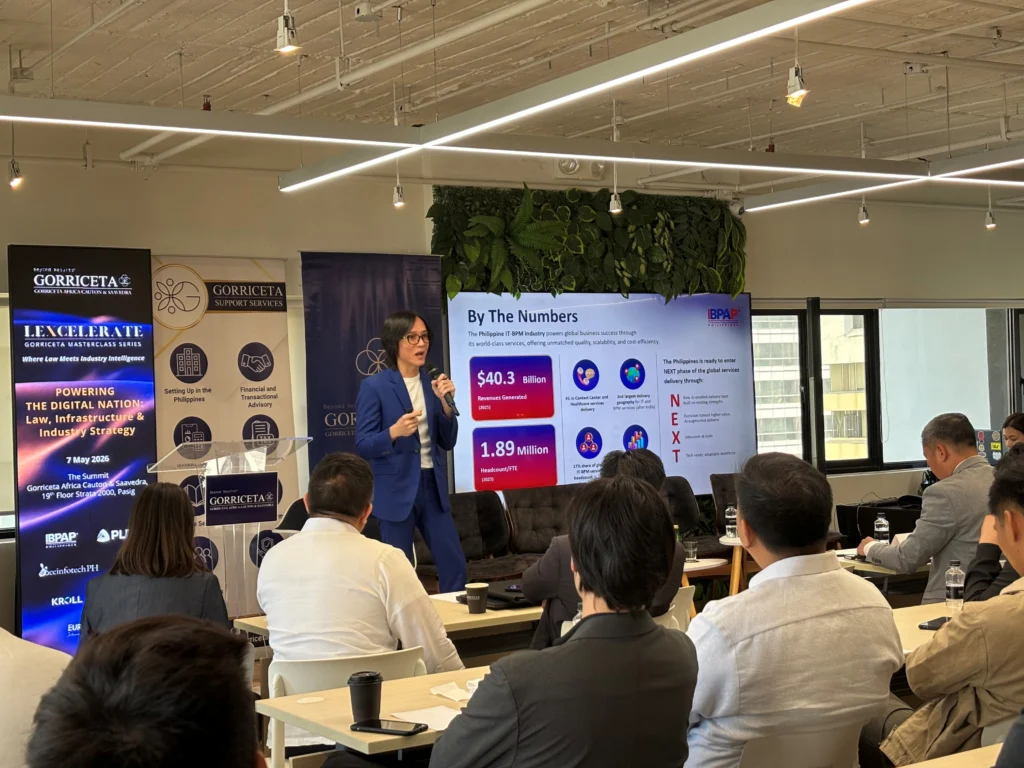
“We can’t just bank on our ability to speak the English language well,” Agcaoili said. “Because of the fact that there are emerging alternatives now that go beyond with the advent of AI.”
Agcaoili emphasized that the industry has evolved far beyond traditional call center work. Philippine IT-BPM companies are now providing healthcare services, software development, workforce management, analytics, and shared services to multinational firms. But the rise of AI is accelerating pressure on companies to transform both their business models and their workforce.
“The name of the game now is how fast can we upskill and reskill the current workforce,” he said.
That urgency stems from how rapidly AI capabilities are improving. Agcaoili described how AI systems can now build workflows, generate policies, perform quality assurance, and even execute tasks previously assigned to junior lawyers, HR personnel, and developers.
“What took them months to do a case review, now if you look at the work that AI is able to deliver, it’s like that of a junior associate,” he said.
Yet, despite concerns about automation, industry leaders repeatedly stressed that AI should not be viewed solely as a threat to employment. Instead, they argued that the nature of work itself is changing.
Tanya Famador, Chief Operating Officer of Teleperformance Philippines, said the conversation around AI and job displacement misses the bigger picture.
“The conversation on AI needs to stop on job replacement because jobs are not going away,” Famador said. “The jobs and the landscape of the work are changing.”
Famador explained that many routine customer service tasks have already been automated, with some clients increasing digitization by as much as 70%. But rather than eliminating the human workforce entirely, AI is shifting employees toward more complex responsibilities centered on judgment, empathy, and critical thinking.
“AI is going to automate what can be automated,” she said. “The human job then becomes judgment, decision making, empathy.”
That shift places enormous pressure on both companies and government institutions to modernize workforce training programs. The challenge is no longer teaching workers basic digital literacy, but preparing them for AI-enabled environments where human oversight becomes more valuable than repetitive execution.
“How do we now upgrade the judgment where the human becomes the escalation point to make the better judgment and make sure that we don’t remove the empathy of humans?” Famador asked.
The discussion also highlighted a growing realization that the future of the IT-BPM industry depends not only on talent, but on infrastructure.
As AI systems become more integrated into business operations, demand is surging for data centers, cloud services, cybersecurity systems, and reliable connectivity. The Philippines’ ability to remain competitive will increasingly depend on whether its infrastructure can support AI-driven growth at scale.
Attorney Edsel Tupaz of Gorriceta Africa Cauton & Saavedra described this transformation as the rise of a “shared operating environment,” where BPOs, cloud providers, AI systems, telecom companies, and digital infrastructure operators are becoming deeply interconnected.
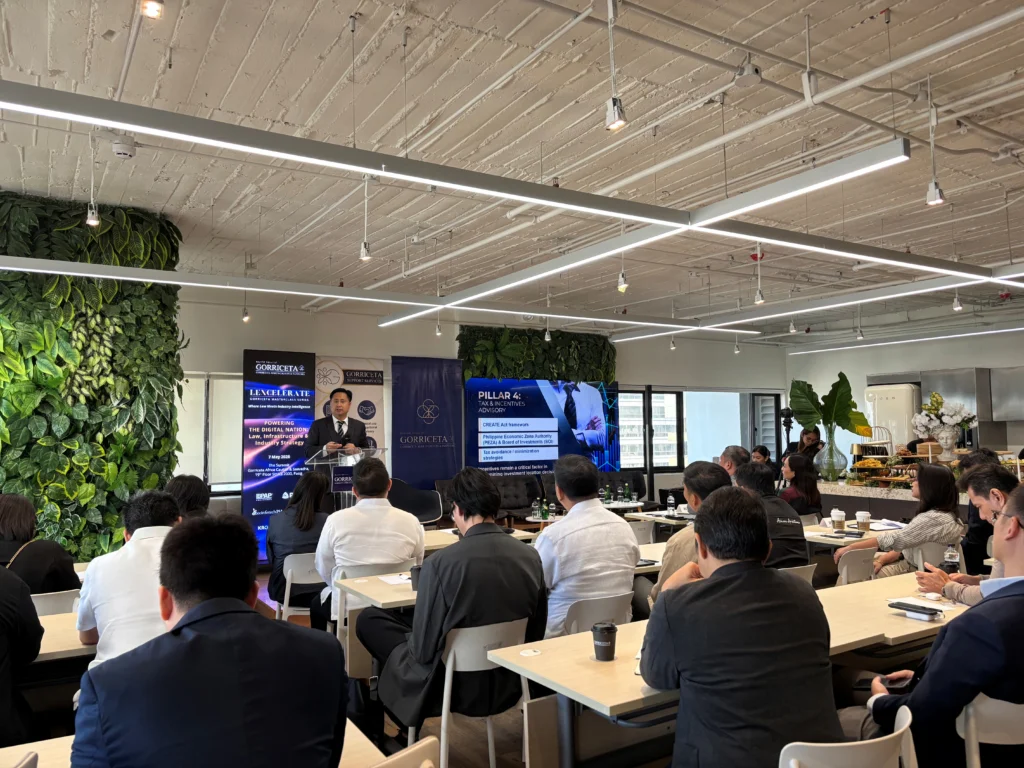
“The digital economy is surprisingly up about 10% of the GDP,” Tupaz noted, adding that roughly 20% of total Philippine employment is now tied to the digital economy.
Tupaz warned that long-standing bottlenecks remain unresolved, including power reliability, permitting inefficiencies, cybersecurity risks, and talent shortages. While the country has strong growth momentum, he argued that the Philippines must stop viewing itself merely as a demand-driven outsourcing destination and instead position itself as a regional digital infrastructure platform for ASEAN.
“We should look beyond and look at the ways in which we can exert frontier leadership in ASEAN,” Tupaz said.
The importance of governance and risk management also emerged as a major concern during the discussions. Carlos Ely Tingson of Global Business Solutions warned that organizations are increasingly exposed to operational and reputational risks as AI adoption accelerates faster than governance structures can keep pace.
“The pace of innovation itself becomes a risk factor,” Tingson said. “The speed of AI adoption, automation, for example, is outpacing the organization’s ability to fully assess the downstream impacts.”
He added that businesses are now confronting rising cybersecurity threats, data localization issues, and fragmented regulatory requirements across jurisdictions. Tingson noted that the real danger comes when “growth outpaces the controls that are supposed to be in place.”
Despite the challenges optimism remained a constant undercurrent throughout the event.
Industry leaders believe the Philippines still possesses one of the world’s strongest outsourcing talent pools. The country’s adaptability, cultural alignment with Western markets, and growing technical capabilities continue to provide a competitive advantage. But as Agcaoili stressed, resilience alone will not secure the industry’s future.
“There’s only so much that resiliency can take us; we deserve better.” He stressed.
The next chapter of the Philippine IT-BPM industry will likely be defined not by whether AI arrives, but by how quickly businesses, educators, and policymakers can adapt to it. The stakes are enormous. Millions of jobs, billions in revenue, and the country’s broader digital future now depend on whether the Philippines can evolve from being a global outsourcing hub into a true AI-enabled digital economy.
In order for artificial intelligence (AI) to work right within the law and thrive in the face of growing challenges, it needs to integrate an enterprise blockchain system that ensures data input quality and ownership—allowing it to keep data safe while also guaranteeing the immutability of data. Check out CoinGeek’s coverage on this emerging tech to learn more why Enterprise blockchain will be the backbone of AI.
Watch | Tech of Tomorrow: Diving into the impact of tech in shaping the future