10-22-2026



|
Getting your Trinity Audio player ready...
|
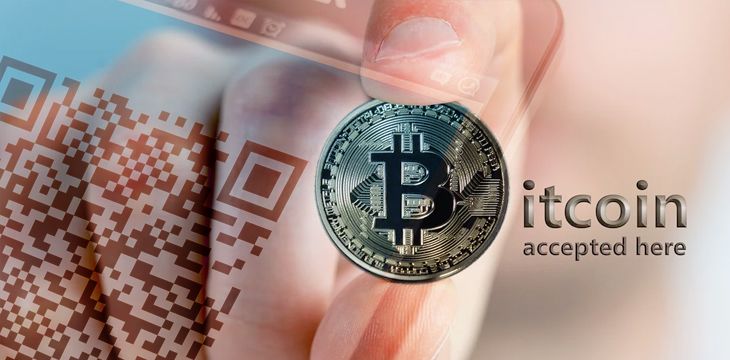
Centrapay recently partnered with Coca-Cola Amatil, allowing customers to pay with digital currency at Coca-Cola vending machines with a QR code payment sticker. The Coca-Cola distributor services Australia, New Zealand, Indonesia, Papua New Guinea, Fiji, and Samoa.
At a time when coronavirus has altered the way individuals interact, Centrapay’s digital asset solution reduces the number of times that an individual at a Coca-Cola vending machine has to touch the vending machine to make their purchase. At the moment, the Coca-Cola vending machines with a QR payment sticker only accept BTC payments that are sent from Sylo Smart Wallets.
“BTC is just the first of many digital assets we intend to support,” Centrapay CEO Jerome Faury told CoinGeek. “Ultimately, consumer demand will determine which digital assets are supported.”
Centrapay intends to make it possible to pay with more digital assets in the future–which makes sense considering that BTC is not the most efficient digital asset to make payments with.
Why would you pay with BTC?
It does not make sense to purchase a soda from a vending machine with BTC because BTC transaction fees are unreasonably expensive.
Data from BitInfoCharts showed that the average transaction fee for a BTC transaction as of June 10, 2020 is $1.16. That being said, if you buy a soda that costs $1.75 with BTC, you will have to pay a total of 2.91–a 67% mark up from the price you would pay if you paid in cash or Bitcoin SV (BSV).
Anypay does a great job explaining why BTC is an unattractive payment option and why it does not make sense for consumers to make purchases with BTC. And just as Anypay pointed out, the original Bitcoin (BSV) is the better payment option for consumers.
Paying with Bitcoin
According to data from BitInfoCharts, the average transaction fee for BSV as of June 10th, 2020, is $.0002.
That means that when you buy a $1.75 soda with BSV, the total cost of your purchase will be $1.7502—a negligible increase in price. In addition, when you pay with Bitcoin (BSV) the payment is nearly instantaneous, unlike BTC, which will take 6 confirmations (roughly 1 hour) before the payment is settled.
BSV is clearly the better choice for a consumer looking to spend their digital currency at a retailer/vendor. Not only is a BSV payment settled faster, but the transaction fees are significantly lower than BTC transaction fees. Data from Coin.Dance show it is currently 3,136.08x more expensive to transact with BTC than it is to transact with BSV—all around, BSV is the better payment option.