10-23-2026



|
Getting your Trinity Audio player ready...
|
TL;DR: The Philippine Supreme Court officially made eNotarization operational on October 19, allowing Filipinos to notarize documents online through accredited providers. Somalia plans to build a unified digital government platform around a national digital ID by March 2027. Japan’s JR East launched Teppay, a Suica-based payment service with a 300,000 yen ($1,900) balance cap.
Key Takeaways:
- The Philippine Supreme Court declared eNotarization officially operational on October 19, 2026.
- The first accredited eNotarization providers are NotarizeIT by Unawa, Twala by Ohelio, and QLegal by Quanby Solutions.
- Somalia’s Halmeel plans to launch a unified digital government platform by the end of March 2027, with national digital ID as the primary credential.
- Japan’s JR East’s Teppay raises the Suica mobile balance cap from 20,000 yen ($126) to 300,000 yen ($1,900).
- Teppay will expand to the Pasmo transit card by next spring.
The Philippines’ Supreme Court implements eNotarization
The Supreme Court of the Philippines announced on October 19 that eNotarization, or electronic notarization of documents, is now officially operational.
The first eNotarization transaction was held in Taguig City, witnessed by Supreme Court Senior Associate Justice Marvic Leonen, First Lady Liza Araneta-Marcos, Information and Communications Secretary Robert Joseph de Claro, and Anti-Red Tape Authority Ernesto Perez.
With the implementation, Filipinos can now avail of the Supreme Court’s eNotarization by registering with any of the first batch of accredited electronic notary public providers, including NotarizeIT by Unawa, Twala by Ohelio, and QLegal by Quanby Solutions.
Registration can be done through the Supreme Court’s online portal. After signing up, users may pick an Electronic Notary Public from the published list of commissioned Electronic Notary Publics (ENPs). The Supreme Court has also posted instructional videos on how to use the facilities.
eNotarization was initially approved by the High Court in March 2025, acting on the recommendation of Associate Justice Alfredo Benjamin Caguioa, chairman of the subcommittee on the revision of rules governing notaries public.
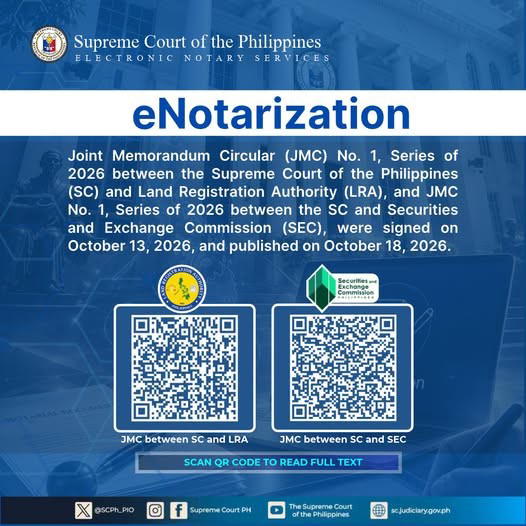
Before its official implementation, on October 13, the Supreme Court signed two separate Joint Memorandum Circulars with the Land Registration Authority (LRA) and the Securities and Exchange Commission (SEC) regarding the implementation of the judiciary’s Electronic Notarization project.
Somalia plans to launch a unified digital government services platform by 2027
In another digital governance initiative, Somalia plans to roll out a unified digital government platform for its national digital ID, as reported by Biometric Update on October 19.
The plan for the unified digital government services platform is expected to be finalized by the end of March 2027, with the national digital ID serving as the primary credential for accessing government services.
Director General of Somalia’s Unified Public Service Delivery Center (Halmeel), Mohamed Dubo, told Biometric Update that the platform will connect the country’s ministries, departments, and agencies via a single interface while also enabling participating institutions to retain their existing systems.
“This is a major opportunity for Somali people, both in the country and in the diaspora, to access government services with a single click. It will save them the many hours they currently spend traveling between different agencies, ministries, and departments that are scattered across the city or country,” Dubo said.
“When we launch the digital service delivery platform, all government service providers will be able to make their services available through the platform while retaining their own mandates and digital infrastructure. Connecting these systems to the Halmeel platform will facilitate service delivery, improve efficiency, and enhance government revenue generation.”
Halmeel is established following a Cabinet resolution on April 23. It is intended to simplify access to Somalia’s public services, including passport issuance, national ID issuance, business registration, and education certificates.
Halmeel will initially operate as a physical service center in Mogadishu with plans to open two more facilities in the coming months.
During the initial phase, the digital platform is expected to offer over 70 government services, with plans to expand further. Via Halmeel, Somali citizens will be able to submit requests for government transactions, track applications, and make payments through a common interface.
Japan launches new digital payment service for trains
Back in Asia, East Japan Railway, or JR East—the largest passenger railway operator in Japan, covering the Tokyo metropolitan area, Kanto, Koshinetsu, and Tohoku regions—recently launched a new digital payment service dubbed “Teppay,” NHK World reported on October 20.
The digital service, which was reportedly launched to compete with PayPay—the country’s largest mobile payment and digital wallet service—uses barcodes and QR codes, integrated into a model app for Suica, a smartcard in Japan used for public transportation and shopping.
Until recently, Suica users could only keep a balance of up to JPY 20,000 ($126), but with Teppay, users’ balances are capped at JPY 300,000 ($1,900).
Aside from paying for East Japan Railway tickets, the digital payment service can also be used to purchase items like electronics and pay hotel fees. If linked to JR East’s View Card credit card, users can use the service based on their credit limit.
“We aim to offer a great value to our customers with a wide range of payment services based on Suica,” Takamatsu Naoto, a senior official at East Japan Railway, said.
“Suica is a very valuable business tool or means to enhance corporate value,” said Tsuchiya Yasuhito, senior analyst at Tokai Tokyo Intelligence Laboratory. “So having a clear vision is the most important thing in my view.”
According to JR East, the new digital services will also be available on Pasmo by next spring.
FAQs:
Is eNotarization available in the Philippines now?
Yes. The Philippine Supreme Court announced on October 19, 2026, that eNotarization is officially operational.
Which companies offer eNotarization in the Philippines?
The first accredited providers are NotarizeIT by Unawa, Twala by Ohelio, and QLegal by Quanby Solutions. After registering on the portal, users select an Electronic Notary Public from the Supreme Court’s published list of commissioned ENPs.
How do I register for eNotarization in the Philippines?
Sign up through the Supreme Court’s online eNotarization portal, then pick an Electronic Notary Public from the published list of commissioned ENPs.
What is Somalia’s Halmeel platform?
Halmeel is Somalia’s Unified Public Service Delivery Center, created after an April 23 Cabinet resolution. It plans to have a unified digital platform by the end of March 2027, with a national digital ID as the primary credential and over 70 government services available at launch.
How will Somalia’s digital platform work for government agencies?
Halmeel will connect ministries, departments,, and agencies through a single interface while allowing each to keep its existing systems. Citizens will submit requests, track applications, and make payments in one place instead of traveling between scattered government offices.
What is Teppay?
Teppay is a digital payment service from East Japan Railway (JR East), launched to compete with PayPay. It uses barcodes and QR codes in the Suica mobile app and raises the maximum balance from 20,000 yen to 300,000 yen.
Watch: Philippines Moves to Blockchain e-Government