10-09-2026



|
Getting your Trinity Audio player ready...
|
A survey conducted by YouGov in 2023 found that nearly half of Americans who registered for an online gambling account were interested in using cryptocurrencies for betting. And this was three years ago! Fast forward to today, and while it’s difficult to determine exact numbers, ChatGPT tells us we can estimate 27% of online American gamblers use crypto to fund their accounts, and half of this activity involves stablecoins.
- Stablecoins’ bigger business play
- Gaining real-world use
- Powering frictionless finance
- The treasury value
- Advancing crypto regulation
- Web3 is the next big opportunity
Now, here is where things get interesting—stablecoins for player deposits and withdrawals are not the only opportunities for iGaming operators. The easier entry point is in B2B payments and the even bigger opportunity is in treasury management. These two points, along with compliance and operational challenges that go along with them, were covered during SBC’s Payment Expert Digital Summit on April 15.
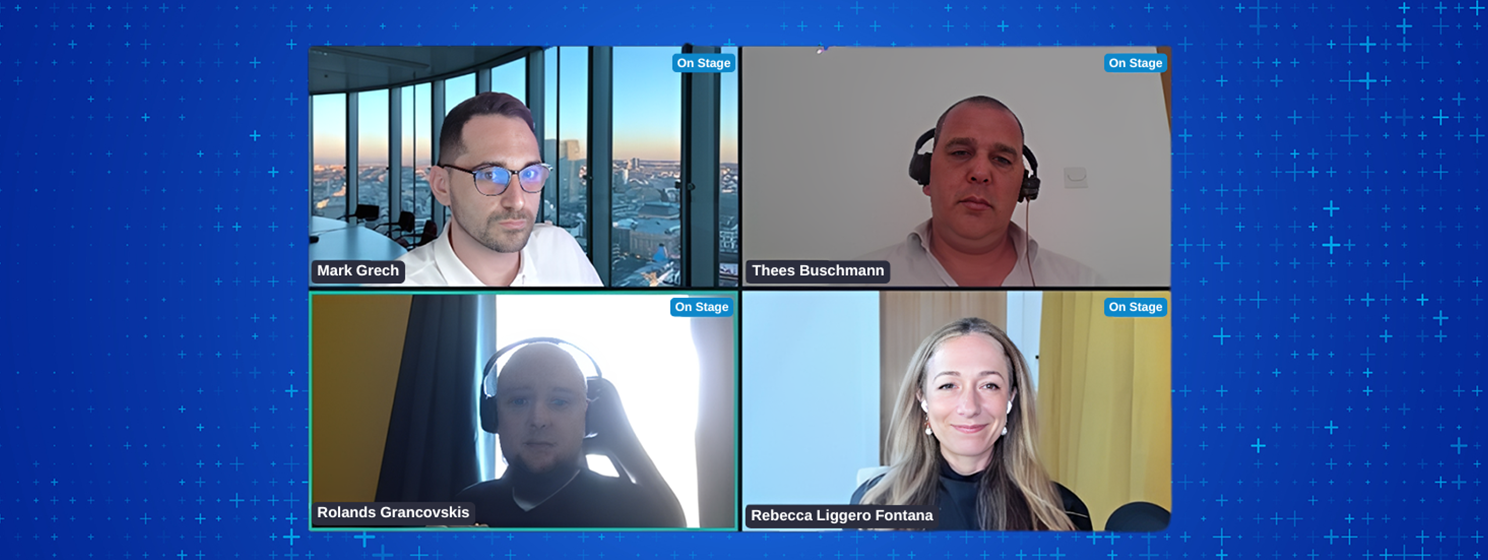
The “How Stablecoins Could Transform Operator Payments” panel in particular featured Mark Grech, Co-Founder and CEO at Veris.finance, our blockchain/Web3 expert; Rolands Grancovskis, Group Head of Payments at TheLotter, our payments operations expert;Thees Buschmann, Senior Consultant at Chevron Group (NASDAQ: CVX), our compliance expert; and I, as the moderator.
All panelists agreed that stablecoins as payments and stablecoin infrastructure drive efficiency, but there are the usual adoption and compliance challenges that accompany early usage of frontier technology.
To get the full scoop, you can access the 45-minute panel on demand, for free, here.
For some bitesize takeaways in the meantime, here are my top five from the discussion.
It’s early, but it’s important to stay ahead of the curve
For those of us who have been following since the beginning of Bitcoin, it may not feel early, but for most people, it is. It also depends on where you live in the world. Grech pointed out that in the Middle East you can do anything with stablecoins—buy groceries, even buy a house. But in places like Malta, where he is based, this is not possible (yet).
According to Grancovskis, where there is demand, operators such as TheLotter will find a way to cater to it. And the demand for stablecoins is coming, if it hasn’t already. This is why all panelists agreed it’s essential to stay ahead of the curve, get the right people on board who understand stablecoins and the regulations that surround their use, and stay informed because “with emerging tech comes education,” said Grech.
“We need to think ahead in order to be able to compete with competitors from an operational side, apart from that to be in place with what the players and the customers want,” he added.
B2B is the easier entry point for operators
According to Grech, with stablecoins come no banking friction, higher approval rates, better player retention, global access, fewer limitations on offering multi-currency, and the list goes on. In addition, many high-value players prefer crypto, so operators must accommodate these players. However, all panelists agree that B2B payments are an easier entry point for operators.
For Grancovskis, B2C payments are “tricky,” and the demand is not high in the markets TheLotter operates in, at least not yet. He said B2B rails and working with local payment service providers (PSPs) are the easier entry point for stablecoins and confirmed the process is much better than SWIFT. The PSPs settle in stablecoins in minutes and reduce layers where transactions could get stuck or reverted. PSPs then settle in stablecoins with operators who can use these funds to pay vendors and affiliates, many of which already accept stablecoins as payment.
Grancovskis warned that some vendors charge operators a fee to convert stablecoins back to fiat.
Buschmann agreed and said B2B payments are much easier to manage than B2C, for example, you can negotiate gas fees and conversion fees with the vendors, but you cannot do this with the player; they just want everything in one click.Treasury and liquidity management: The overlooked opportunity
Going one step beyond B2C and B2B payments, stablecoins can also be useful in treasury operations, reconciliation, and fund separation. According to Grech, this is one of the most important areas for any operator offering stablecoins as a payment solution, yet few operators think about it.
Managing a treasury on-chain provides transparency, a good overview of real time movements and funds across brands and sectors. Regulators can easily access the information they need, and it’s easier for operators to understand what is going on globally. Grech said operators can even manage their funds in crypto by “being their own bank,” avoiding the added conversion costs of crypto-to-fiat and back.
Regulatory progression and challenges
The passage of the EU’s Markets in Crypto-Assets Regulation (MiCA) has made things easier for operators working with stablecoins, as it makes everything more streamlined across jurisdictions, as pointed out by Grancovskis. However, while Buschmann agrees we are making progress toward consistent regulation, he said being your own bank is difficult as a compliance person because you must deal with regulatory discrepancies. If you’re spanning across five, six, seven different countries, the rules could be different and then this brings in new costs to bear, he said.
“If we could consolidate the political views, at least in the European markets, this would make things much easier for us as operators and also much safer for the entire industry to provide security and good service to the players,” Buschmann added.
Going all-in Web3, the biggest opportunity of them all
As someone who has been excited about the intersection of blockchain and iGaming for nearly 15 years, I’ve seen significant progress beyond focusing solely on payments. It all started with using Bitcoin as a payment method back in the early 2010s, and we can now run an entire online casino on Web3 rails, but not many operators are taking the plunge just yet; rather, they are simply adding Web3 components to Web2 rails.
The real magic happens with everything is on-chain and no parties have to worry about converting anything back to fiat. In this scenario, the hidden on- and off-ramp conversion fees disappear, and friction is removed; all we are waiting for are regulations to catch up, but we are finally making some progress. It makes me so happy to finally watch it all unfold.
Watch | The secret startup growth hack nobody talks about: Mentorship that builds unicorns