10-25-2026



|
Getting your Trinity Audio player ready...
|
For decades, millions of overseas Filipino workers have accepted one frustrating reality: sending money home is expensive.
- Exploring the future of money transfers for Filipinos
- Can stablecoins revolutionize remittance costs for Filipinos?
- The biggest challenge facing stablecoins in the Philippines
Whether it’s a domestic helper in Hong Kong, a nurse in London or an engineer in Dubai, every remittance comes with fees that slowly chip away at the money meant for their families.
But what if those costs could shrink to almost nothing?
That question is quickly moving from theory to reality as stablecoins, a type of digital currency designed to maintain a stable value, become one of the hottest topics among Philippine banks, regulators, and fintech companies.
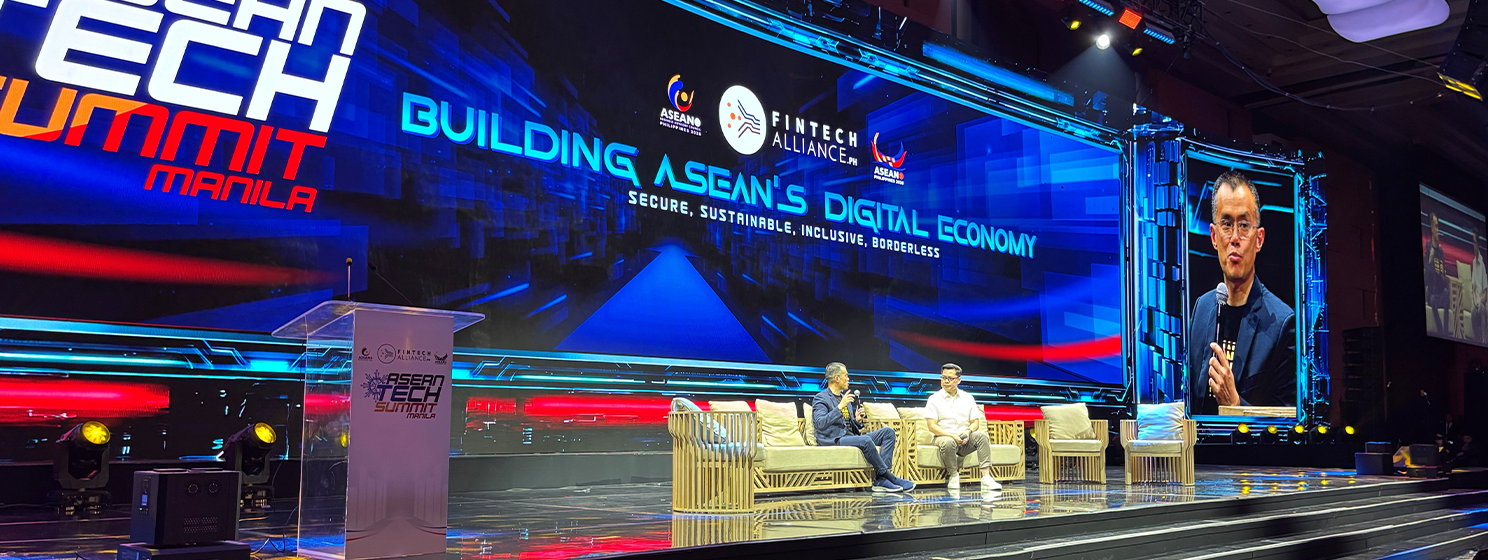
At the recently concluded ASEAN Tech Summit 2026, FinTech Alliance PH Founding Chairman Lito Villanueva sat down with Binance founder Changpeng “CZ” Zhao for a fireside chat that focused not on digital currency trading, but on something far more relatable to ordinary Filipinos: making money move faster, cheaper, and more efficiently.
Villanueva opened the discussion with a statistic that explains why the Philippines is paying close attention.
“We’re the third largest in the world in terms of inward remittance volume. Last year alone, we were able to register around US$35 billion in inflow from our overseas Filipinos,” he said. “This is something that would really help our Filipinos overseas and, of course, their families back home.”
Today, sending money internationally can still cost between 5% and 7%, depending on the provider. For households that depend on monthly remittances, those fees quietly eat into family budgets year after year.
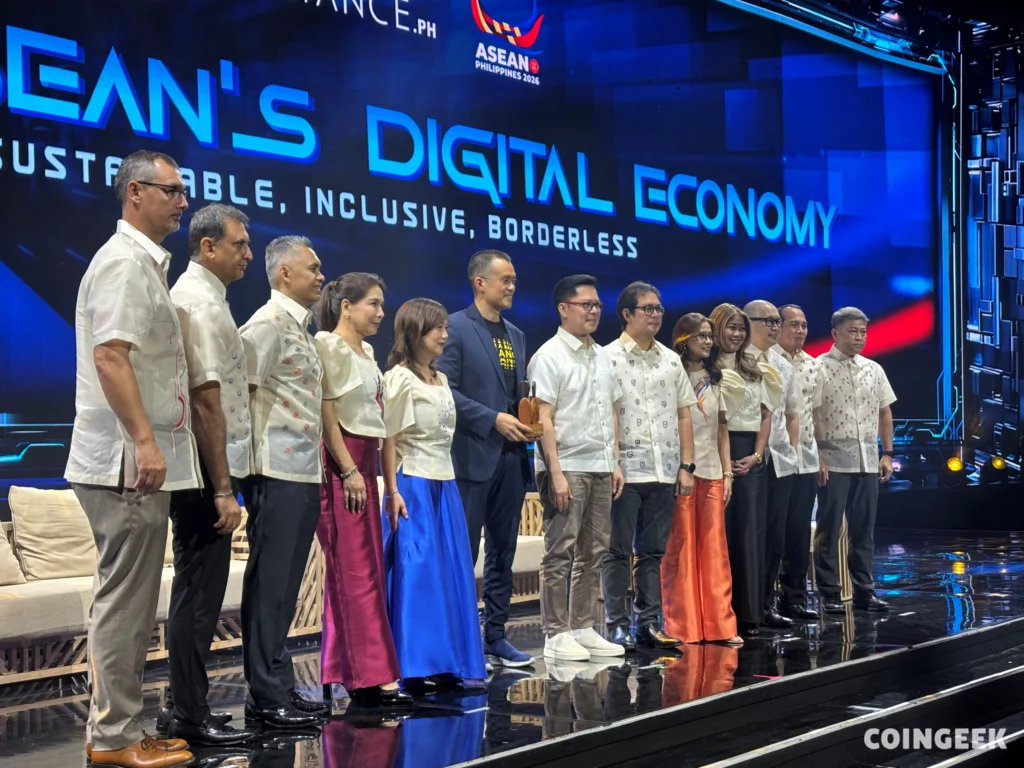
Zhao believes blockchain technology can fundamentally change that.
“The remittance costs today are just astronomical. They’re just insane,” he said. “Using blockchain technology, we can bring that cost down significantly and the speed faster.”
He added that with roughly US$35 billion flowing into the Philippines every year, billions of dollars are currently being lost to fees.
“We can probably reduce that to almost zero in fees, so that’s a huge amount of savings for the population.”
While “almost zero” is an aspirational figure rather than a guaranteed outcome, the broader point is that blockchain-based payment rails have the potential to make cross-border transfers significantly cheaper and nearly instantaneous.
That conversation is becoming increasingly relevant because Philippine banks are no longer treating stablecoins as a distant concept.
One of the biggest recent developments is the Bank of the Philippine Islands’ planned pilot of stablecoin rails for cross-border payroll. This initiative explores whether blockchain can be used to pay employees working across different countries. Instead of salaries passing through several correspondent banks, each adding time and cost, the payment could move directly over blockchain infrastructure before being converted into local currency.
For the average Filipino, the technology itself may never be visible. What they may notice instead is that salaries arrive sooner, overseas remittances become cheaper, and more of the money earned abroad actually reaches home.
The discussion then shifted from using stablecoins to move money to an equally important question: if digital currencies become commonplace, whose digital money should Filipinos be using?
Villanueva pointed to the emergence of PHPX, a proposed peso-backed stablecoin being developed by a consortium of major Philippine banks. Unlike digital currencies whose prices fluctuate wildly, PHPX is designed to maintain a one-to-one value with the Philippine peso and serve as a digital settlement asset for payments, transfers, and other financial services. Its goal is not to replace the peso or function as a central bank digital currency, but to modernize how pesos move across digital networks.
Zhao believes initiatives like PHPX are essential.
“A local bank currency is absolutely necessary. It is not even an option,” he said.
“The Philippines needs its own multiple local stablecoins, hopefully. But a PHPX is absolutely necessary. Otherwise, you’re basically giving up your economy or transactions to run on somebody else’s currency.”
His point reflects a growing global discussion. As financial transactions become increasingly digital, countries are exploring how to ensure their own currencies remain central to domestic commerce rather than relying entirely on foreign-issued digital assets.
Of course, lower fees alone are not enough to convince consumers to embrace a new financial system.
Recognizing that, Villanueva repeatedly steered the discussion toward consumer protection, emphasizing that any gains in efficiency must be matched by trust and security.
“One of the things that most Filipinos would normally ask, or even our regulators, would be on security,” he said, noting that safety remains a top priority alongside lower transaction costs.

Zhao agreed that while blockchain networks themselves are generally secure, protecting users ultimately depends on the services built on top of them.
“Security is… really important,” he said. “The blockchains are pretty secure themselves. It is the service provider that needs to be secure.”
That concern naturally led to another growing challenge: scams powered by artificial intelligence (AI) and increasingly sophisticated online fraud.
Villanueva noted that many ordinary consumers struggle to distinguish legitimate financial products from fake investment schemes, especially as deepfake technology becomes more convincing.
Zhao’s advice was simple: “If something sounds too good to be true, it probably is.”
He also urged users not to invest more than they could afford to lose. He said AI itself can increasingly help identify suspicious wallet addresses and potentially fraudulent transactions before money is sent.
As the conversation progressed, both speakers arrived at an interesting conclusion: the biggest challenge facing stablecoins may not be technology at all.
It is education.
“The harder part is the financial education,” Zhao said. “Schools today do not teach financial literacy… We need to collectively improve on that.”
Villanueva agreed, stressing that despite competition within the industry, there is one area where banks, fintech companies, and regulators share the same objective.
“There is one thing that we are united in… consumer protection is always the prime consideration,” he said.
That shared goal also shaped the discussion on regulation. Rather than portraying regulators as obstacles to innovation, Zhao said his perspective has evolved after spending time advising governments on digital asset policy.
“I actually understand their job is pretty difficult,” he said. “They share the same goal as founders… We all want to protect our users.”
Villanueva expanded on that idea by discussing ASEAN’s efforts to promote regulatory cooperation through initiatives such as license portability or regulatory passporting, allowing licensed financial firms to expand more easily across borders while maintaining regulatory oversight.
Taken together, the discussion painted a picture of an industry that is beginning to mature. Stablecoins are no longer being discussed solely as digital currency products. Increasingly, they are being viewed as financial infrastructure capable of supporting payroll, remittances, cross-border trade, and everyday payments.
For most Filipinos, the underlying blockchain technology may never matter.
What will matter is whether sending money home becomes cheaper, whether salaries from overseas arrive faster, and whether families get to keep more of what their loved ones worked so hard to earn.
If that happens, stablecoins may become one of the most important financial innovations Filipinos never realize they are using.
Watch | Coins.ph: Becoming the source of liquidity for Filipinos who want to trade