05-13-2026



|
Getting your Trinity Audio player ready...
|
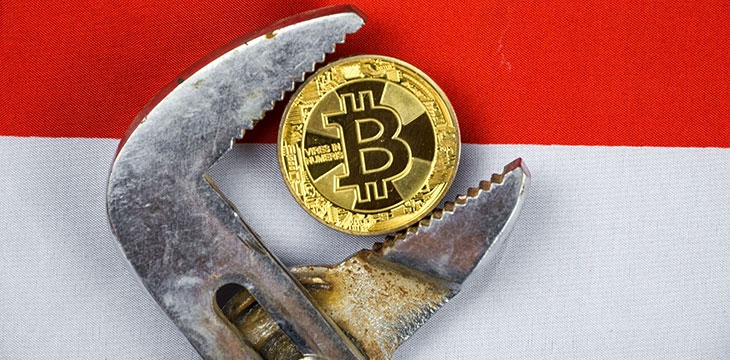
One of the world’s biggest digital currency hubs is prohibiting financial institutions from engaging in digital currency sales. The financial regulator in Indonesia has reiterated its earlier warning against the rapidly growing industry even as pressure mounts from powerful religious organizations against digital currencies.
The Financial Services Authority of Indonesia, locally known as the Otoritas Jasa Keuangan (OJK), issued the fresh warning via Instagram, reminding financial institutions that digital currencies are a no-go zone.
View this post on Instagram
The OJK included a quote from chairman Wimboh Santoso who made it clear that the agency will go after any institution involved in digital currencies in any way, whether by offering the sales itself or facilitating the trading.
“OJK has strictly prohibited financial service institutions from using, marketing, and/or facilitating crypto asset trading,” Santoso stated.
The OJK is one of the latest regulators globally that has prohibited financial institutions from getting involved with digital currencies. The Reserve Bank had previously issued a similar ban in neighboring India, which stood for years before industry stakeholders successfully petitioned against it. Nigeria’s central bank has also made it clear that banks must not get involved with digital currencies.
Indonesia is one of the world’s biggest digital currency markets. Despite banning digital currency payments, the country saw a 1,770% rise in total engagement and a 600% surge in Google search volume in 2021. Indonesia had 7.2 million digital currency owners in 2021, almost twice the number in 2020, according to data by Coinformant.
The latest crackdown comes at a time when the pressure to ban digital currencies from influential religious organizations has been mounting. As CoinGeek reported in November, the world’s largest Islamic religious organization, known as Nahdlatul Ulama, declared Bitcoin haram and called for the government to ban it. Nahdlatul Ulama’s influence can’t be overstated, boasting over 90 million members.
However, the country has made it clear that it doesn’t intend to follow countries like China that have imposed a total ban on cryptocurrency. In October, Muhammad Luthfi, the Minister of Trade, stated that the government has no intention of imposing a blanket ban, but it would tighten regulations.
Watch: CoinGeek New York panel, Blockchain for a Better Supply Chain & Sustainability
https://www.youtube.com/watch?v=wGw6rBv7nlc&t=10734s
Recommended for you