04-12-2026



|
Getting your Trinity Audio player ready...
|
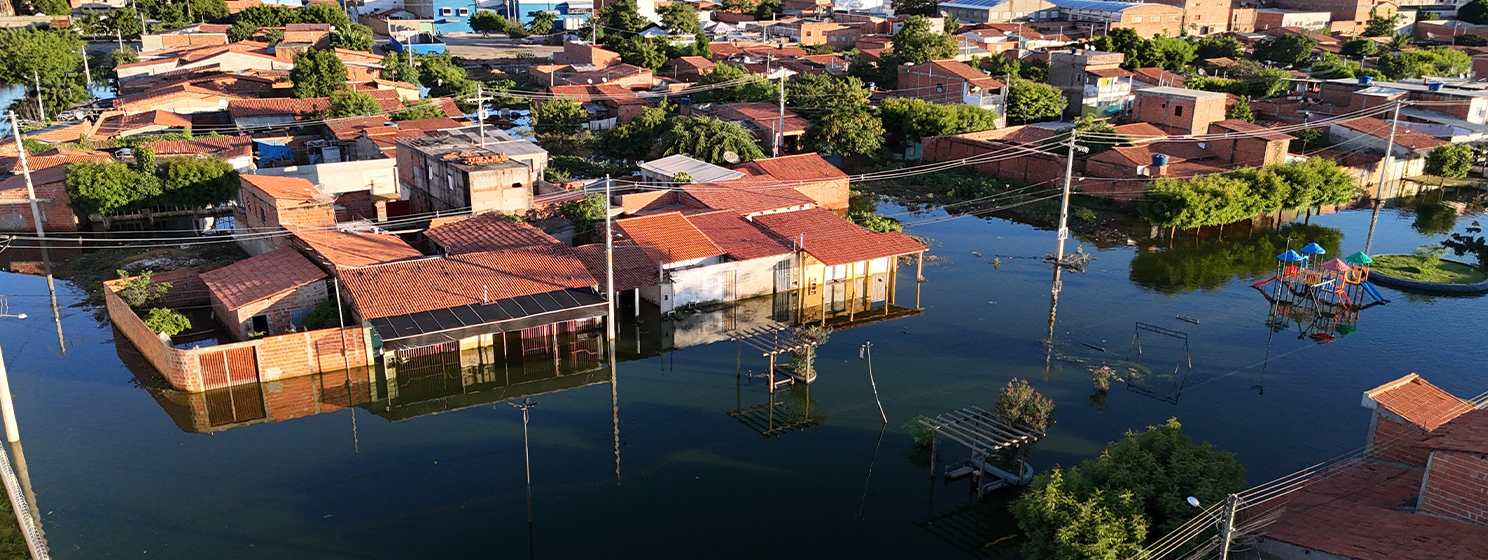
Google (NASDAQ: GOOGL) may soon be able to predict dangerous flash floods up to 24 hours in advance, thanks to its Gemini-powered artificial intelligence (AI) tool, Groundsource.
On March 12, Google unveiled the rollout of Urban Flash Flood forecasts on Flood Hub, its real-time global flood forecasting. By leveraging AI, Google said that it can now predict the risk of flash floods, particularly in urban areas, a day in advance. At the time of writing, Google’s flood forecasting initiative is focused on riverine floods, predicting when rivers overflow their banks over a relatively slow period.
“While our forecasts cover over 2 billion people in 150 countries for the most significant riverine floods events, urban flash floods present a unique challenge. Unlike riverine floods, flash floods are characterized by their rapid onset, requiring a fundamentally different forecasting approach,” Google said in a blog post.
“By training models on historical river gauge measurements, we can accurately predict localized water rises and anticipate when a river is likely to exceed its flood banks. We have also successfully extended these predictions to ungauged locations to provide more global coverage of riverine floods.”
However, Google admits that flash floods can occur anywhere, and often far from any stream gauge. According to them, in urban settings, intense rainfall, impermeable surfaces, and drainage systems make traditional physical modeling limited to the global scale. And to add to this concern, the lack of historical records of past flash floods and their locations makes it difficult for ML models to learn patterns.
To address these, Google used Groundsource, a new AI-powered model to “analyze publicly available news reports that mention floods to confirm flood event details (e.g., clear locations and times)” with the help of Gemini.
Groundsource uses a recurrent neural network (RNN) with a long short-term memory (LSTM) unit, specifically designed for processing time-series data. The new AI flood monitoring model also uses meteorological time-series inputs and static geographic, geophysical, and anthropogenic details, such as urbanization density, topography, and soil absorption rates.
In its initial launch, Google will focus on providing forecasts for urban areas worldwide, as the training data or news reports for such areas are “naturally more dense,” it claimed. “Currently the model predicts impact in areas with population densities greater than 100 people per square kilometer,” reads Google’s blog post.
Groundsource is part of the Google Earth AI family, which looks into geospatial models and datasets to support its Crisis Resilience effort.AI for weather and flood forecasts
For years, similar efforts have been ongoing to use AI for natural disaster forecasts.
In 2024, Taiwan’s Cabinet approved the use of AI to manage a wide range of climatic disasters, allocating NT$3.09 billion ($94 million) to build an AI-based system to detect flooding events hours before they occur. Meanwhile, Chinese researchers from the Shanghai Academy of Artificial Intelligence for Science (SAIS) at Fudan University have developed an AI model tailored for sub-seasonal forecasting, demonstrating high accuracy within a two-week window.
Elsewhere, India—a country deeply affected by flash floods—has been exploring the use of AI to mitigate climate change risks. However, the South Asian country has a long way to go due to economic, bureaucratic, and socio-political constraints.
In the blockchain ecosystem, SmartLedger and SmartGrow AgriTech have co-developed WeatherChain. This enterprise-level blockchain solution captures and verifies IoT-generated weather data hashes across agriculture, viticulture, and building management systems.
In order for artificial intelligence (AI) to work right within the law and thrive in the face of growing challenges, it needs to integrate an enterprise blockchain system that ensures data input quality and ownership—allowing it to keep data safe while also guaranteeing the immutability of data. Check out CoinGeek’s coverage on this emerging tech to learn more why Enterprise blockchain will be the backbone of AI.
Watch: From Washington to Weather Data with Alexander Mann
Recommended for you