04-12-2026



|
Getting your Trinity Audio player ready...
|
Love it or hate it, the latest boom in blockchain (think tokenization and stablecoins) is thanks to increased regulations in the space. Now that we can see the impact regulatory clarity has on pushing this technology forward, it’s essential to educate policymakers on our needs so they can make informed decisions.
- Blockchain innovations discussed in UK House of Lords
- Alun Cairns moderates a roundtable discussion
- Blockchain proves the provenance of a will
- Government-backed initiatives promotes adoption
- Blockchain in the supply chain space
- Enterprise blockchain adoption
- UK’s digital identity grip
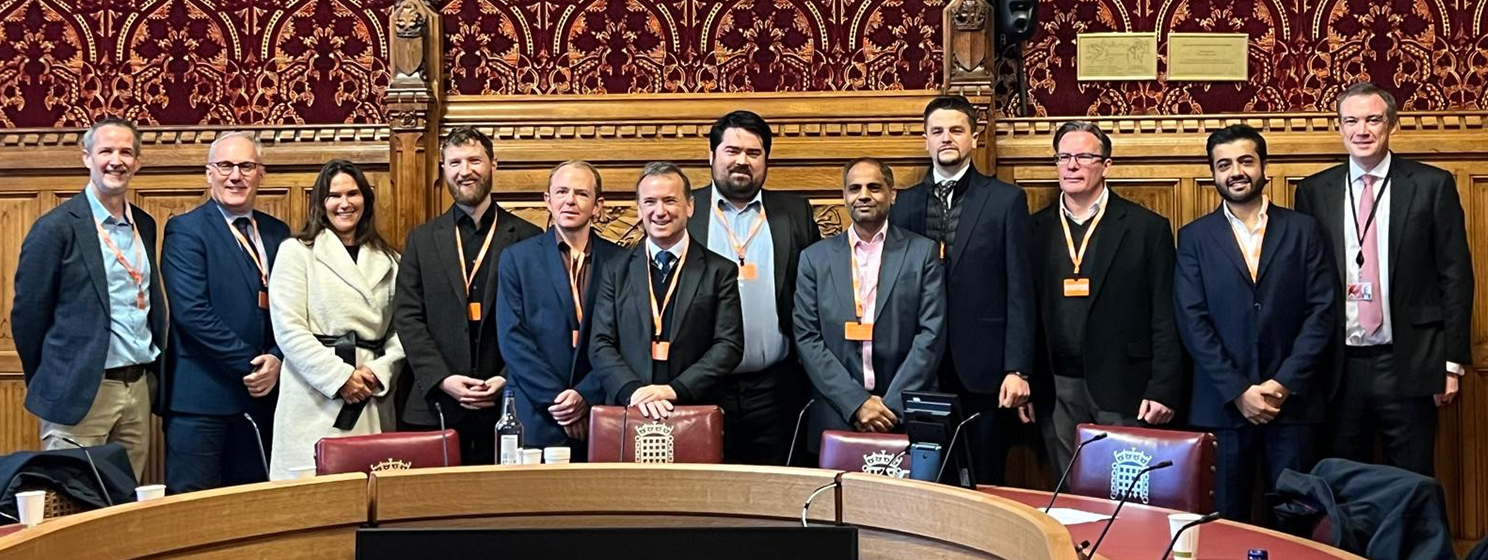
This is precisely why BSV Association facilitated a direct dialogue between Blockchain innovators and U.K. policymakers on November 24 at the House of Lords in London. The event brought together BSV Association Global Policy Leadership, policymakers, and parliamentarians with an interest in or oversight of technology and financial regulation, as well as blockchain companies that are innovating in the space.
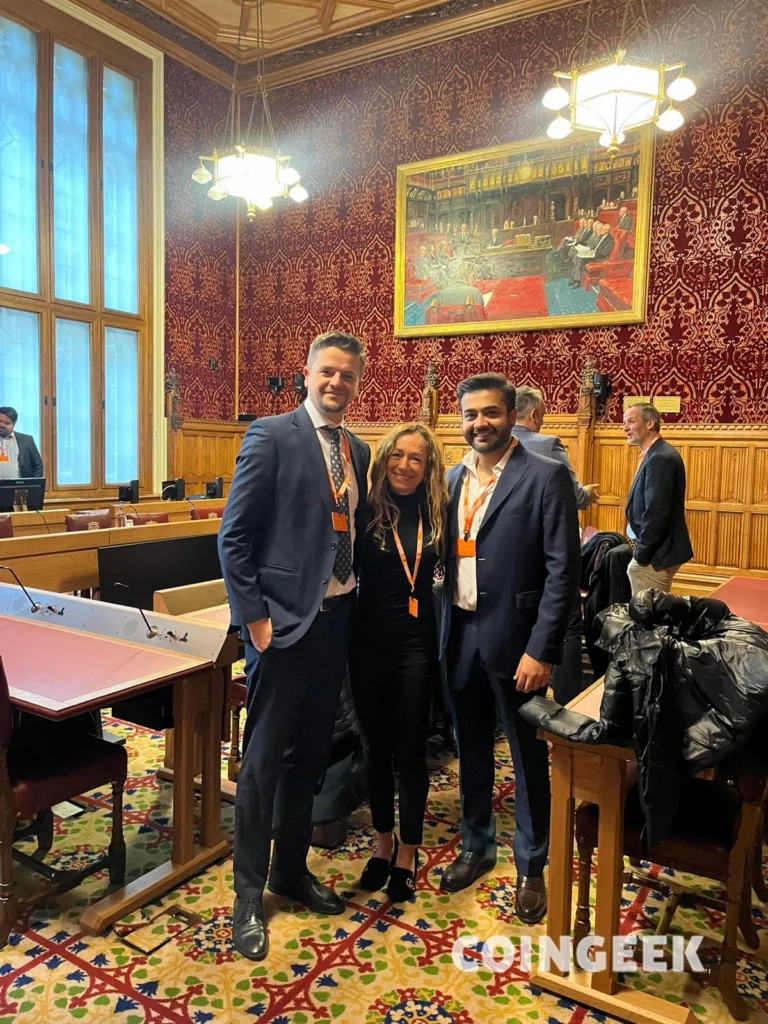
“The objective was to gather on-the-ground insights from companies actively building and operating on the BSV blockchain about the specific policy initiatives that would best support and benefit them as innovators,” Martin Coxall, BSV Association Director of Growth & Strategic Partnerships, shared with CoinGeek.
“This helps BSV Association formulate its global policy recommendations to ensure they are practical and directly address the needs of the industry. The ultimate goal is to foster a regulatory environment in the U.K. that supports and accelerates digital innovation using the BSV blockchain,” he said.
To facilitate an open discussion at the House of Lords, Alun Cairns, Former U.K. Cabinet Member and Member of Parliament, moderated a roundtable with representatives from BSV Association, Rekord, Bitroots, d2legaltech, Teranode Group, Adeus, Libraro, Blockchain SVCS, Binarii Labs, Rivello Ltd, and Aerospike.
Cairnes prompted the group to elaborate on three areas: what their businesses/technology can do and the difference it can make, what challenges they have faced in rolling out or adopting their technology, and what the pinch points are and how to address them.
“For us, the biggest challenge is the grey area around regulation. We use blockchain for IP, rights protection, attribution, and payments (not trading), but we still get labelled in the wider uncertainty. Clearer guidance on how non-financial blockchain applications are treated would remove a big barrier,” shared Arsim Shillova, CEO of Libraro, a startup in the book publishing space.
“Also, more targeted support for Web3 infrastructure companies (not just fintech) would make a massive difference. With the right clarity and support, companies like Libraro can hire locally, scale here, and actually show what responsible blockchain adoption looks like,” he said.
Mark Hedley, co-founder and COO of Adeus, discussed the use of blockchain to prove the provenance of a will, explaining how this provides clarity and peace of mind to people and their loved ones, while also alleviating pressure on the court system.
“Although a change in legislation is not needed to reap some of the benefits of blockchain in wills and legacy planning, the move to electronic wills proposed by the Law Commission in its modernizing wills law report would significantly accelerate adoption,” he said.
“It would reduce friction for consumers as the technology sits behind the scenes, providing significant benefits and increasing accessibility and affordability of these legal services to a wider section of the adult population. A win for consumers, blockchain-powered startups, and the public sector,” he added.
“From a U.K. policymaker’s perspective, the biggest opportunity is to create environments where technology and commercial problem-solving meet,” shared Aleksander Gora, head of identity and digital trust for Teranode Group.
“Sandboxing, collaborative pilots, and sector-specific frameworks help align technical capability with real business metrics—and that is what unlocks enterprise-level adoption and economic value for the country,” Gora added.
Jay Gujral, head of growth at Rekord, agreed and added, “Government-backed initiatives would accelerate adoption massively. If public institutions helped set standards for data, for supply chains, identity, ESG, digital product passports, and due diligence—enterprises would have a framework to build toward. That reduces fear and gives procurement teams something to reference,” he said.
“Government-backed sandboxes, procurement incentives, and clarity around data verification standards would enable U.K. companies to test this technology safely, rather than waiting for another country to lead. The incentives need to be right for adoption, and right now it’s seen as more of a cost center, that needs to be spun on its head,” he said.
Carl Jackett, CEO of Rivello, also pointed out that the incentives are misaligned for using blockchain in the supply chain space, an area of massive opportunity for the technology.
“Blockchain is just another IT tool in our toolkit. Supply chains are a great example of where blockchain tooling could improve outcomes, but only if the incentives are aligned,” he said.
“This is a business challenge and not a technology one—governments must set reporting benchmarks that require integrated data sets, prime contractors must demand transparency, auditors must expect to independently verify claims, consumers must vote with their money—with these incentives in place, then blockchain can have a role to play,” he added.It’s also essential for governments to stop treating blockchain as a crypto topic and start seeing it as core digital infrastructure, according to Shillova.
“It’s about identity, attribution, and trust, and not speculation. If policymakers focus on practical standards, interoperability, and real-world use cases, enterprise adoption would move a lot faster. There’s a huge opportunity for the U.K. to lead here instead of waiting for others to set the pace,” he said.
Richard Baker, founder and CEO of Tokenovate, was unable to join the roundtable but actively participated in addressing the parliamentarians during the working lunch that followed.
“Enterprise blockchain adoption relies on legal clarity, and the House of Lords is where technical proof meets legislative power. They help ensure the U.K. doesn’t just experiment with blockchain, but builds interoperable, legally-sound digital markets that strengthen our global leadership,” said Baker.
“To lead in digital finance, the U.K. should back open standards such as the Common Domain Model, and public blockchains that are fast, transparent, and built to handle high volumes safely. With the right support for U.K. innovators, these tools can make our financial system quicker, safer, and more competitive,” he advised.
Another significant opportunity for the U.K. lies in digital identity, as noted by Gora and others during the roundtable and the subsequent lunch.
“From the conversations at the House of Lords—and from what we’re seeing every day in the market—the U.K.’s biggest opportunity for innovation isn’t on-chain. It’s in how identity, trust, and data flow around the chain,” he said.
“Across all the use cases discussed at the roundtable— digital wills, digital rights management, digital product passports, verifiable provenance, supply-chain traceability—the constant theme is that blockchain alone doesn’t create trust. It creates permanence. Identity is what turns permanence into trust. And this is where the U.K. can lead,” he said.
After a productive and pleasant exchange of information at the House of Lords, the primary “next step” for BSV Association is the immediate application of the insights gained into BSV Association’s global policy strategy. BSV Association does not want to commit to any specific regulatory outcome, but rather to a process of continuous, informed engagement, according to Coxall.
“Given the value of this direct dialogue, BSV Association intends for this initiative to be a recurring engagement, with plans to potentially repeat the round table event in 2026 to ensure continuous and timely communication between policymakers and the ecosystem’s innovators,” Coxall added.
Watch: What’s the BIGGEST myth in blockchain that needs debunking?
Recommended for you