11-17-2026



|
Getting your Trinity Audio player ready...
|
TL;DR: Trump nominated four new CFTC and SEC commissioners, including his first Democrats for either agency. Four Democratic senators also pressed the SEC on tokenization rules, while the CFTC sued two more states over prediction market sports betting, bringing its total to 12.
Key Takeaways:
- Trump nominates first Democratic candidates for CFTC and SEC commission seats in his second term: Matthew Rowland and Kristin Johnson.
- Republicans Nathan Anonick (CFTC) and Steven Levine (SEC) were also nominated, with hearings set for November 17 and 19.
- Four Democratic senators asked SEC Chair Paul Atkins to clarify tokenization rules.
- The CFTC sued Arkansas and Louisiana over sports betting on prediction markets, bringing its state lawsuits to 12.
The White House has finally nominated potential commissioners for its top financial regulatory agencies, while one of those regulators has now sued nearly one-quarter of all U.S. states for opposing prediction market sports betting.
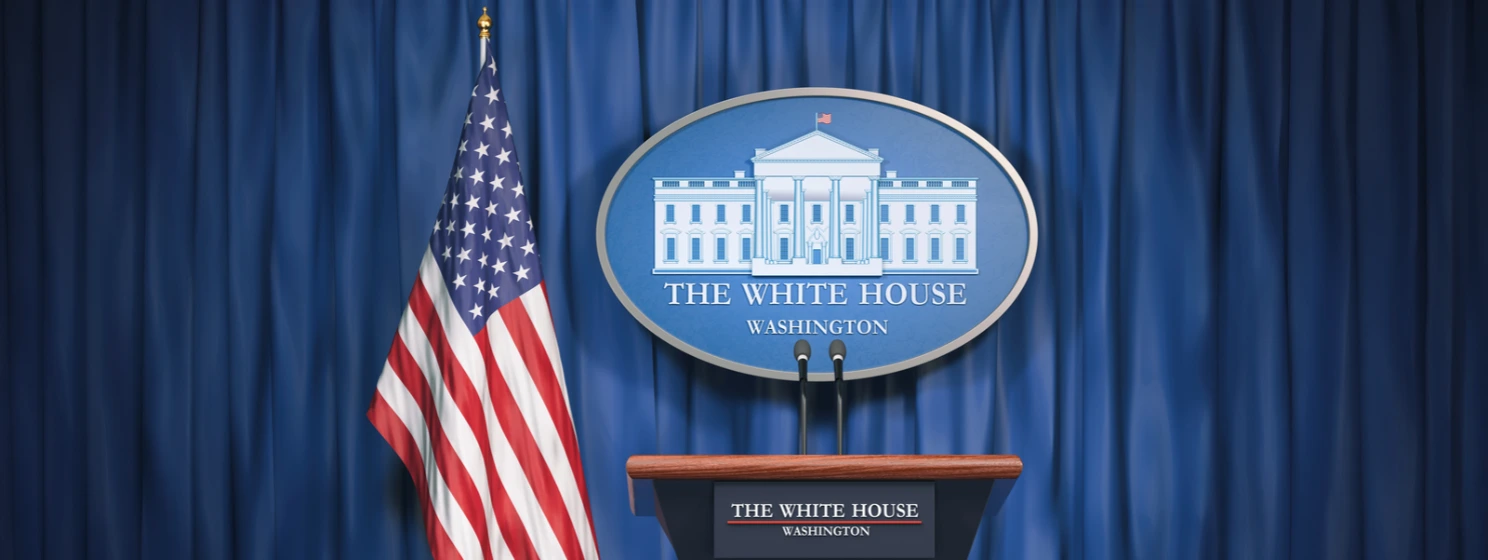
On November 12, the White House confirmed that it had sent nominations for new commissioners for the Commodity Futures Trading Commission (CFTC) and Securities and Exchange Commission (SEC) to the Senate for consideration. It’s the first time President Donald Trump has nominated any Democrats for either agency since returning to the White House nearly two years ago.
For the CFTC, Trump has nominated Nathan Anonick and Matthew Rowland for terms expiring in June 2031 and April 2028, respectively. Anonick is a Republican and legal counsel to Sen. John Boozman (R-AR), while Rowland is a Democrat and a career CFTC attorney who’s served on the regulator’s enforcement division. Both nominees helped their respective parties negotiate the Senate’s failed legislation on digital asset market structure (the CLARITY Act).
For the SEC, Trump has nominated Kristin Johnson and Steven Levine for terms that would expire in June 2029 and June 2030, respectively. Johnson is a Democrat who served as a CFTC commissioner until September 2025. Levine is a Republican who served as deputy chief of staff to current SEC commissioner Mark Uyeda.
Both regulatory bodies have been skeleton crews during Trump’s second term. The SEC currently has three of its five seats vacant, while the CFTC has four vacancies, with its chairman, Michael Selig, serving as a one-man show for 11 months now.
The fact that both regulators have more empty seats than commissioners, and that none of the filled seats represent the minority party in Congress, became one of the obstacles that contributed to CLARITY’s demise in September.
Predictably, each side of the political aisle blamed the other for the vacancies, while the lack of bums in seats was sufficiently awkward that the SEC announced a rule change in October that allowed a single commissioner to qualify as a quorum.
The Senate Agriculture committee, which oversees the CFTC, has scheduled a confirmation hearing for November 17, while the Senate Banking committee, which oversees the SEC, has its own hearing on November 19.
The rapid reaction to the nominations underscores the urgency with which the White House and the outgoing GOP Senate majority are acting. Clearly, the plan is to swiftly confirm these nominees before the Dems assume control in January.
CFTC chair Selig tweeted his praise for Trump’s “two strong bipartisan picks.” Selig congratulated the nominees and said he looked forward to working with them. SEC chair Paul Atkins has yet to issue any message regarding the nominations.
The threadbare makeup of the two regulatory agencies hasn’t slowed their efforts to compensate for CLARITY’s failure, including the SEC stripping away guardrails to advance its tokenization agenda, while the CFTC has gone to bat for crypto operators by clearing them to offer perpetual futures contracts and attempting to declare all exchange activities to be under CFTC responsibility.
The presence of Democratic commissioners might not slow these deregulatory efforts. But it might offer greater insights into the debates that may or may not transpire behind the scenes before additional guardrails are demolished.
SEC asked to clarity tokenization rules
The SEC’s tokenization push is part of its ‘innovation exemption’ and ‘Reg Crypto’ plans, which broadly aim to allow operators to tinker and raise funds without unduly bothering the regulator in advance. But pushback against its tokenized equities plan is ongoing, and the sources pushing back might surprise you.
On Monday, Politico reported that four Senate Democrats—Maryland’s Angela Alsobrooks, Nevada’s Catherine Cortez Masto, Arizona’s Ruben Gallego and Virginia’s Mark Warner—had sent SEC chair Atkins a letter last week expressing their concerns that the tokenization effort “lacks clarity” and “could undermine the integrity of our capital markets and threaten public companies and investors alike.”
The letter poses over a dozen questions regarding the tokenization plan, including how traditional ‘know your customer’ (KYC) and anti-money laundering (AML) protections will apply to these trades, which will take place 24/7 rather than during Wall Street’s narrower window.
The Dems imagine a scenario in which a KYC’d investor transfers a tokenized equity to a self-custodied wallet under someone else’s control, possibly someone outside the U.S. or engaged in criminal activity. The Dems also want further rulemaking affecting tokenized equities to be conducted via a more “transparent” process.
The letter’s signatories are by no means the usual crypto scolds, as all four played key roles in attempting to achieve bipartisan and stakeholder consensus to allow CLARITY to advance. The Dems acknowledge the “efficiencies” that tokenization might bring but want to ensure that the new methodology “upholds the safeguards that make the U.S.’s capital markets the envy of the world.”
The SEC’s tokenization plan is off to a slow start, as OKXICE, the SEC’s first ‘tokenized securities venue,’ found few tokenization takers among Wall Street heavies. As some observers have suggested, the SEC’s requirement that TSVs serve only U.S. customers might dim tokenization’s appeal, given the ready access to brokers that most Americans already enjoy.
A similar phenomenon is said to be limiting the adoption of stablecoin-based payments in developed markets, where there’s already a plethora of digital payment options available. All eyes will be on the handful of crypto operators who have agreed to let OKXICE tokenize their shares later this month, and what (if any) downsides emerge from their experience.
CFTC sues two more states over prediction market sports betting
The CFTC under Selig has bent over backward at times to favor prediction markets—designated contract markets (DCMs) in CFTC parlance—which nearly all crypto exchanges have launched over the last year or so as token trading volume tumbled.
The CFTC has sued multiple states that object to the DCMs offering sports-based ‘event contracts’ that appear to be sports bets under another name. Gambling has always been up to states to oversee, but the operators—with Selig’s at-times aggressive public backing—insist the CFTC has ‘exclusive jurisdiction’ over the swaps (not bets) the platforms are pushing.
Last month, the CFTC sued Utah, bringing the number of states it’s fighting in court to 10. Last week, the CFTC added not one but two more states—Arkansas and Louisiana—to that list, making it an even dozen. The last three, including Utah, have all been filed against states with Republican governors, breaking with the partisan makeup of the first nine suits.
Selig has been criticized for both his willingness to use public funds to defend CFTC licensees as well as his at-times OTT rhetoric. The latter was on full display in his comments regarding Louisiana’s “eleventh-hour ‘emergency’ lawsuit seeking to shut down the entire prediction market industry.” Selig called the suit “naked lawfare and a cynical political stunt.”
Louisiana Attorney General Liz Murrill was anything but cowed, tweeting a response calling out Selig’s “flatly false statements by the ‘obsequious standard bearer’ for Kalshi and prediction markets,” adding that gambling “has been regulated by states for 250 years.”
Utah’s AG was similarly unimpressed with Selig’s bluster, filing felony criminal charges against Kalshi and its co-founders Tarek Mansour and Luano Lopes Lara last month for violating the state’s gambling laws, which prohibit any form of wagering.
Speaking with CNBC at an investor conference in Miami last week, Selig said it was “really egregious that we’re seeing states bring criminal charges, essentially trying to lock up founders and CEOs of these companies that are offering lawful products under a federal regime.” Selig claimed the “technical fights” over whether prediction markets offer bets or ‘swaps’ were “not something that should be at the risk of going to jail.”
However, there’s a growing backlash in Congress that is gathering speed since the Dems handed the GOP an almighty shellacking in this month’s midterm elections. On Monday, nine Dem senators sent the CFTC a letter telling it to stop interfering with states’ efforts to enforce their gambling laws.
In particular, these senators want the CFTC to rescind its November 5 instruction for DCMs to ignore injunctions secured by some states and tribal groups requiring the operators to geofence customers in those states and on tribal lands. The CFTC claims selectively blocking some states violates the Commodity Exchange Act’s ‘impartial access requirements,’ but the senators say the CFTC’s “unilateral decision directly conflicts with active court orders, undermines state and tribal law, and must be reversed.”
And this is no longer an entirely partisan issue. This weekend, the Washington Times quoted Sen. Ted Cruz (R-TX) saying “prediction markets, for sports betting, are a thinly veiled way to get around state laws regulating gambling.” Cruz said gambling should be left to the states, “rather than a federal back door that circumvents state regulation.”
Meanwhile, a chorus of critics have called out Kalshi for attempting to portray the states’ objections as applying to every single market on a given DCM platform. The reality is that states’ objections are focused squarely on the sports betting angle, and the effort to paint an alternate reality has been slammed as (at best) disingenuous.
The apparent aim here is to provoke public outrage among users in these states that might convince local officials to back down. But the sharp elbows being thrown by the would-be disrupters appear to have left marks that will be neither forgotten nor dismissed. See you in court.
FAQs:
Who did Trump nominate to the CFTC?
Republican Nathan Anonick, counsel to Sen. John Boozman, and Democrat Matthew Rowland, a career CFTC enforcement attorney.
Who did Trump nominate to the SEC?
Democrat Kristin Johnson, a former CFTC commissioner, and Republican Steven Levine, former deputy chief of staff to SEC Commissioner Mark Uyeda.
When are the CFTC and SEC confirmation hearings?
The Senate Agriculture Committee meets on Tuesday, November 17, to consider CFTC nominees. The Senate Banking Committee meets Thursday, November 19, for SEC nominees.
Why are Democrats concerned about SEC tokenization rules?
Four Democratic senators say the plan lacks clarity and could weaken KYC and AML protections, especially if tokenized shares move to self-custodied wallets.
Why is the CFTC suing states over prediction markets?
The CFTC claims exclusive jurisdiction over sports-event contracts, classifying them as swaps. States say sports betting is governed by state gambling laws.
Are Republicans opposing prediction market sports betting?
Yes. Sen. Ted Cruz (R-TX) called them a thinly veiled way around state gambling laws. Utah, Arkansas, and Louisiana, all with Republican governors, are among those sued.
Watch: Digital currency regulation and the role of BSV blockchain