10-07-2026



|
Getting your Trinity Audio player ready...
|
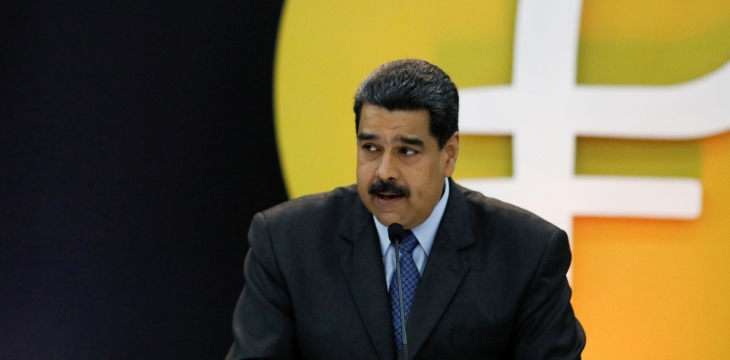
After almost single-handedly tanking the country’s economy, Venezuela President Nicolas Maduro had a bright idea. He decided that the best course of action would be to introduce a state-backed digital currency (SBDC) that he affectionately dubbed the Petro, ostensibly for the wealth of petroleum in the country. As most people predicted, the digital currency was received more as a cartoon joke than an actual currency, as economists argued that Maduro’s lack of financial acumen would certainly be carried over to the Petro. Also, as most predicted, no one can actually ascertain what the Petro is worth.
Maduro has tried to force the Petro on Venezuelans, ordering banks to accept the currency, moving pension payments to the system and requiring passport fees be paid using the crypto. He has even sought to have the Petro accepted as a legitimate unit of measurement of oil, a move that didn’t receive a lot of international support.
When the country’s central bank asserted last November that the Petro would have a “unit of account” equal to 9,000 sovereign bolivars, Venezuela’s national currency, it added that 638.18 bolivars would be equivalent to one U.S. dollar. This would mean, if one Petro is equal to an oil barrel that every Petro is worth $14.10. However, the exchange rate presented by the Banco de Venezuela shows that one Petro is worth now around 38,200 bolivars – the equivalent of $59.85.
To make things more interesting, the actual value of the bolivar against the U.S. dollar cannot be ascertained. Venezuela says that it is 638:1, but Bloomberg, on its Café Con Leche Index, shows that it is 900:1.
In rumors that show that the non-believers and anti-Petro crowd were more than likely correct, reports are now surfacing that Venezuela doesn’t actually hold any of the cryptocurrency, or the oil reserves meant to back the coin.
The whole project has been viewed by most as nothing more than another sham by their leader. In fact, the Petro whitepaper was said to be almost an identical copy of the white paper published when the Dash cryptocurrency launched its initial coin offering (ICO). As Venezuelans continue to suffer from lack of food and health services due to the actions of one individual, the country doesn’t seem capable of introducing any resolution that can stabilize its economy.