04-11-2026



|
Getting your Trinity Audio player ready...
|
The United Kingdom government has dropped plans to require workers to sign up to its proposed digital ID scheme to prove their right to work in the country.
The apparent U-turn was revealed by Chancellor Rachel Reeves in an interview with BBC Breakfast on Tuesday, in which she clarified the government’s new position on the ID.
“We are saying that you will need mandatory digital ID to be able to work in the U.K.,” said Reeves. “Now the difference is whether that has to be one piece of ID, a digital ID card, or whether it could be an e-visa or an e-passport, and we’re pretty relaxed about what form that takes.”
This is a substantial departure from the government’s previous position, announced in unequivocal terms by Prime Minister Sir Keir Starmer in September 2025, to a mixed reception.
“Today I am announcing this government will make a new, free-of-charge digital ID mandatory for the right to work by the end of this parliament,” said Starmer. “Let me spell that out. You will not be able to work in the United Kingdom if you do not have digital ID. It’s as simple as that.”
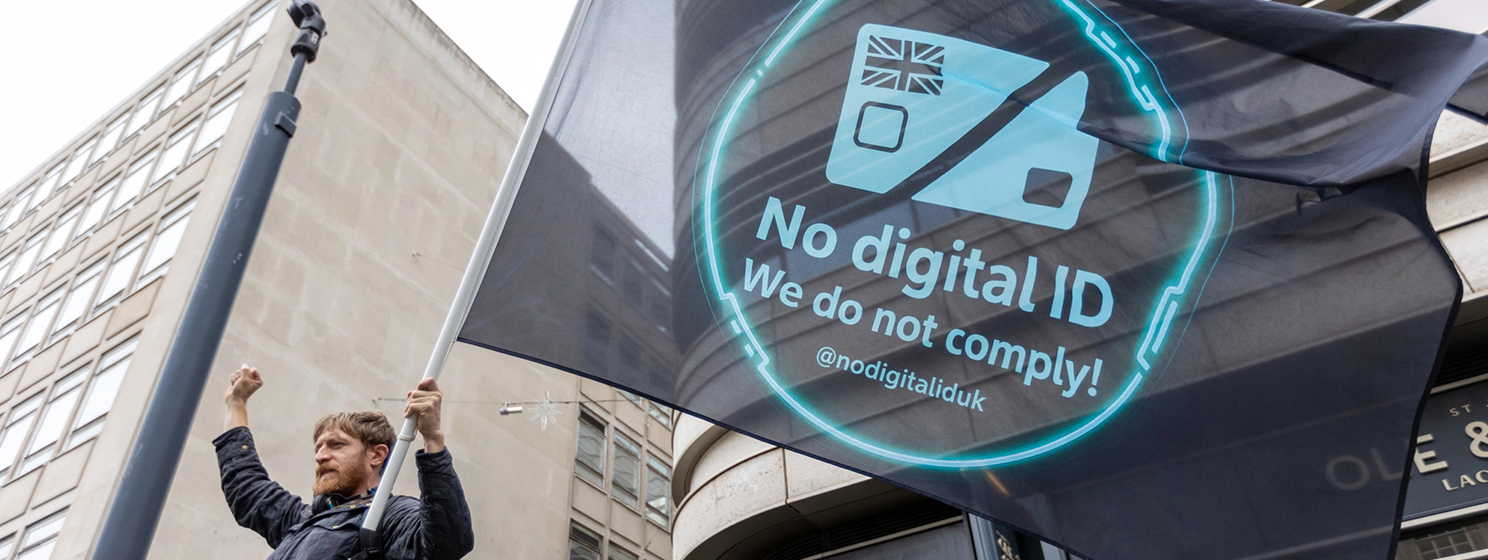
The plan met with an immediate and hostile response from opposition leaders, liberty advocacy groups, such as Big Brother Watch, Open Rights Group, and Liberty Human Rights, and a large, vocal section of the public.
Speaking on BBC Breakfast, the Shadow Secretary of State for Work and Pensions, Helen Whately, said that the Conservative Party “opposes” the introduction of mandatory ID, saying that “we don’t want to become a country where people are stopped in the street and asked to show their ID.”
Meanwhile, a petition on the government website titled “Do not introduce Digital ID cards” garnered 850,000 signatures within a few days of the announcement; it now has over 2.9 million signatures.
It appears that the breadth and strength of opposition to the plan may have taken the government by surprise, and, already struggling in recent opinion polls, it has now decided to roll back the mandatory nature of the digital ID.
Plans for the digital ID, also known as BritCard, have not been dropped entirely, but under the updated scheme, outlined by Chancellor Reeves on Tuesday, it will now be emphasized as a voluntary tool to make access to public services easier and quicker.
Reeves also confirmed that by 2029, right to work checks will still be done digitally, for example, by using biometric passports, but registering with the new digital ID program will be optional.Backlash
After Reeves’ announcement, Conservative leader Kemi Badenoch reportedly commented, “Good riddance. It was a terrible policy anyway,” adding that the move by Labour represented “another U-turn” from the embattled Labour administration.
Meanwhile, civil liberties and privacy advocacy group Big Brother Watch reacted positively to the updated scheme.
“We welcome Starmer’s reported U-turn on making intrusive, expensive and unnecessary digital IDs mandatory,” said the group. “The proposal to make right to work checks digital could raise similar cybersecurity, fraud and privacy risks that digital IDs carry. The devil will be in the detail but this whole digital ID debacle smacks of incompetence.”
Further, it urged the government to take the next step and drop the proposed scheme entirely, arguing that “taxpayers should not be footing a £1.8bn bill for a digital ID scheme that is frankly pointless.”
Despite its critics, not everyone was against the digital ID plan in its previous form.
Former Labour Home Secretary Lord Blunkett lamented the government’s decision to water down the policy by removing the mandatory aspect of right-to-work checks. He told the BBC Radio 4 Today Program on Tuesday that “the original announcement was not followed by a narrative or supportive statement or any kind of strategic plan which involve other ministers or those who are committed to it actually making the case.”
As a consequence, added Blunkett, “those who are opposed to the scheme for all kinds of nefarious or very different reasons, some of them inexplicable, were able to mobilise public opinion and get the online opposition to it up and running.”
The full details of how the digital ID will now work have yet to be outlined, but it should include the name, date of birth, nationality, residence status, and a photo. Members of the public will still be required to verify their identity digitally, through a process yet to be finalized, but this could involve existing documents such as a passport.
While some see the watered-down plan as the worst of both worlds, the government hopes that the optional ID will still help improve access to public services and crack down on illegal working, a hot issue in the U.K., while avoiding the controversy that comes with making it compulsory.
Watch: Why using transparent ledger for digital identity ensures trust
Recommended for you