10-16-2026




|
Getting your Trinity Audio player ready...
|
South Africa‘s tax authority released a draft guidance last July 1 to clarify how “crypto” assets are taxed under the existing income and capital gains tax framework, inviting public comments until August 31.
The South African Revenue Service (SARS)—the African nation’s tax-collecting authority—has published a “Draft Guide to the Taxation of Crypto Assets,” which applies the country’s capital gains tax rules and existing tax framework under the Income Tax Act of 1962.
The draft guideline clarifies that most activities involving “crypto” assets, such as trading, swapping, and spending, should be considered disposals that could trigger tax events.
SARS noted that the applicable regulations will depend on each taxpayer’s specific circumstances. Additionally, the updated guidance emphasizes that “crypto” assets are not recognized as legal tender or foreign currency; instead, they are classified as intangible assets for tax purposes.
“The preferred interpretation of the legal nature of crypto assets is that, although highly versatile and capable of negotiability, they are not ‘currency’ and, consequently not ‘foreign currency.’ It has been argued in local academic circles that crypto assets may fall within the ambit of ‘foreign currency’ or ‘currency other than the currency of the Republic,’ unless it can be substantiated that cryptocurrency is not a currency to begin with,” SARS said.
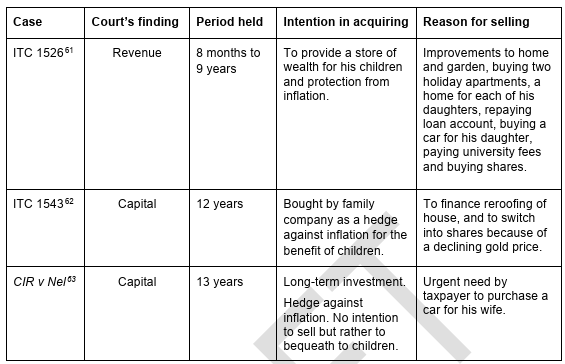
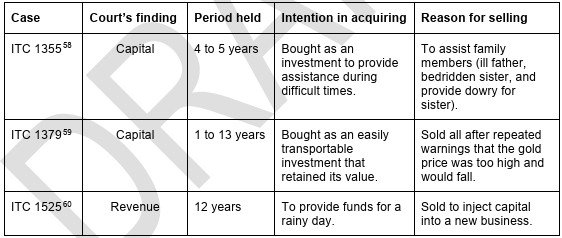
In determining how “crypto” must be taxed, the guideline stresses the taxpayer’s intention. According to SARS, the payer should be classified as a trader or long-term investor depending on their behavior, transaction frequency, and the purpose for holding the asset.
“It is important to consider the taxpayer’s intention at the time of acquisition, at the time of selling the asset, and whilst holding the asset, as a taxpayer’s intention regarding an asset may change over time,” the guideline read.
Additionally, the guidelines in section 55 state that “crypto” assets may be subject to South Africa’s donations tax, as they are classified as “property” under the country’s tax legislation. Applicable tax may range from 20% to 25%, depending on the total value of the donated digital assets.
The draft guidance is not yet final and remains open for public comment until August 31.
Once adopted, it is expected to impact millions of local users in South Africa, as the SARS 2024 report states that at least 5.8 million residents hold digital currencies.
The growing landscape of digital currency adoption in South Africa
As of September 2025, the South African Revenue Service has called on all digital currency exchanges, wallets, and other VASPs to register their businesses or face legal consequences.
“We’ve invited taxpayers, exchanges and other intermediaries to register, because now, if you don’t register, you’re breaking the law,” SARS Commissioner Edward Kieswetter told Bloomberg. “Once they have registered, we now have knowledge of their existence, and we can now begin to track their business activities.”
South Africa ranks among Africa’s leading digital asset markets alongside Nigeria. Data from the country’s Financial Sector Conduct Authority (FSCA) indicates that nearly six million South Africans own digital assets, accounting for 10% of the nation’s population. However, of the six million owners, just 17,000 (0.28%) declared their digital assets on their tax returns.
The use of digital assets in South Africa extends beyond investment and speculation. In 2025, the FSCA estimated that the number of users participating in decentralized finance (DeFi) would reach approximately 378,000, with most of the growth driven by the increasing use of digital assets for payment transactions.
Watch: Boosting financial inclusion in Africa with BSV blockchain