10-23-2026



|
Getting your Trinity Audio player ready...
|
Cryptocurrencies and blockchain technology haven’t really taken off in the Middle East. The region has been quite conservative, with some nations like Qatar banning the use of Bitcoin altogether. However, the region is waking up to the realization that digital currencies are the future. According to Irina Heaver, the co-founder of Emirex crypto exchange, the region is making great steps and will become a major player in the near future.
It’s easy to define the Middle East by the standards of a few countries, such as Qatar’s anti-crypto stand. However, it’s much more than this, with 22 countries that all have different approaches to crypto.
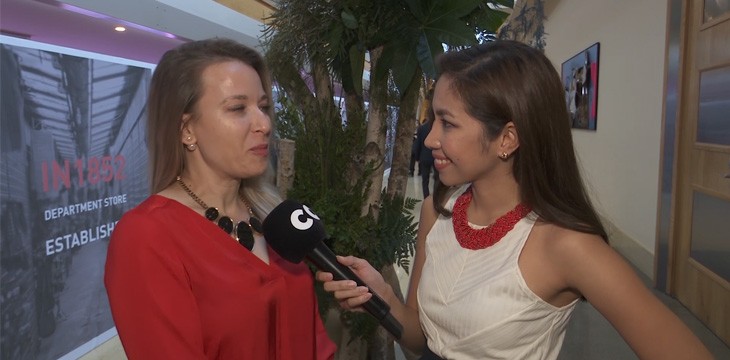
In an interview with CoinGeek’s Stephanie Tower during the Malta AI and Blockchain Summit, Irina explained:
The Middle East is not homogenic. We’ve got 23 countries and so the approach from the regulators is not homogenic either. Dubai is very pro-blockchain. It has announced that by 2021, most government services will be on blockchain.
She’s referring to the Emirates Blockchain Strategy 2021. Announced in April 2018, the initiative aims at using blockchain to offer at least 50% of all government services. The UAE government expects to save 398 million printed documents annually and 77 million working hours by integrating blockchain.
Emirex has been working with several governments to find the best way forward for the industry, Irina revealed. These include the Bahraini government as well as some regulators in Saudi Arabia. Most of them are cautious regarding crypto, as they should be since it’s still in its early days.
“There’s definitely a lot of interest, and a lot of support. But the regulators, as they should be, are cautious. This is our approach—don’t go full in, take your time with it.”
The biggest reason for the cautious approach is the menace of terrorism financing, a vice that has gripped the Middle East more than any other region. The governments are concerned that by allowing full use of cryptos, criminals could take advantage and fund terrorists. Money laundering is also a concern for most regulators, Irina told CoinGeek.
Irina, who is an attorney by trade, believes that with 400 million people, 60% of whom are below 25, the Middle East’s potential can’t be overstated. It has taken much longer than the U.S. and Europe to get into crypto, but once it does, it will be unstoppable.