10-22-2026



|
Getting your Trinity Audio player ready...
|
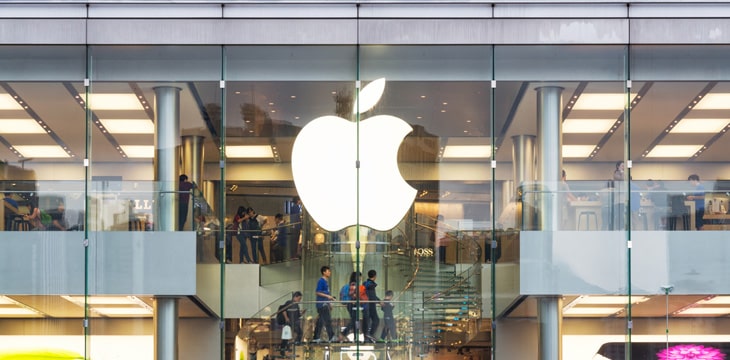
Apple Inc. (NASDAQ: AAPL) has released App Store rules related to non-fungible tokens (NFTs) for the first time.
The Silicon Valley tech giant laid out good use cases for NFTs and confirmed that its 30% “Apple Tax” will apply to in-app purchases. NFTs purchased elsewhere will be available for viewing only.
The firm also allows applications “use in-app purchase to sell and sell services related to non-fungible tokens (NFTs), such as minting, listing, and transferring.”
There’s no avoiding the Apple Tax on NFTs
Apple has drawn heavy criticism for applying its signature 30% tax to purchases made in apps such as Magic Eden and OpenSea.
Whereas the standard commission is 2.5%, Apple is doubling down on its much larger tax while ensuring there’s no way to circumvent it.
The new rules spell out that buttons, external links, and other calls to action will be banned within apps. This ensures that all NFT purchases will be made in-app, and Apple will get its cut.
Previously, some apps dialed back the ability for Apple users to buy and sell NFTs within their apps upon learning about the 30% tax. However, that hasn’t stopped Apple from implementing it, regardless.
Clarification on rules for exchanges and acceptable payments
The new guidelines clarified existing digital currency exchange app policies and how payments could be made within related apps.
No specific changes were made to the rules regarding trading apps such as Binance. Apple’s 30% tax has never applied to trades in these apps, and it has not changed that policy.
However, it has been clarified that these apps can only be offered in countries where a license has been obtained.
For in-app purchases of any kind, whether NFT purchases or digital currency trades, they will have to be conducted in fiat currencies rather than digital ones.
The net continues to close in on unregulated activity
While Apple’s tax on NFTs made the headlines with this guideline release, and rightly so, the extra language around exchange apps only being available in regions and countries where a license had been obtained was equally worth commenting on.
For years, we’ve been reporting on the trend toward a more regulated digital currency and blockchain industry. Every week or month, more and more companies shut out exchanges and trading apps that have failed to obtain legitimate licenses in the nations they operate in.
Not long ago, this very same issue led a wave of U.K. banks to ban deposits to Changpeng Zhao’s Binance. The digital currency exchange, known for its jurisdiction hopping, promised to obtain a proper U.K. license and then refused to cooperate with the regulator. It also abandoned an application to run a licensed exchange in Singapore for similar reasons.
We see how big companies increasingly want nothing to do with the shady operators that have characterized the digital currency industry thus far. Apple is just one of many who have made it clear that companies who refuse to abide by the law aren’t welcome on their platforms.
Going forward, expect this noose to tighten further as companies begin to self-police in anticipation of further regulatory crackdowns. In a few years from now, the industry will be unrecognizable, and only the regulated, legally compliant companies and blockchains will survive.
Watch: The BSV Global Blockchain Convention panel, The Future of Digital Asset Exchanges & Investment