03-28-2026



|
Getting your Trinity Audio player ready...
|
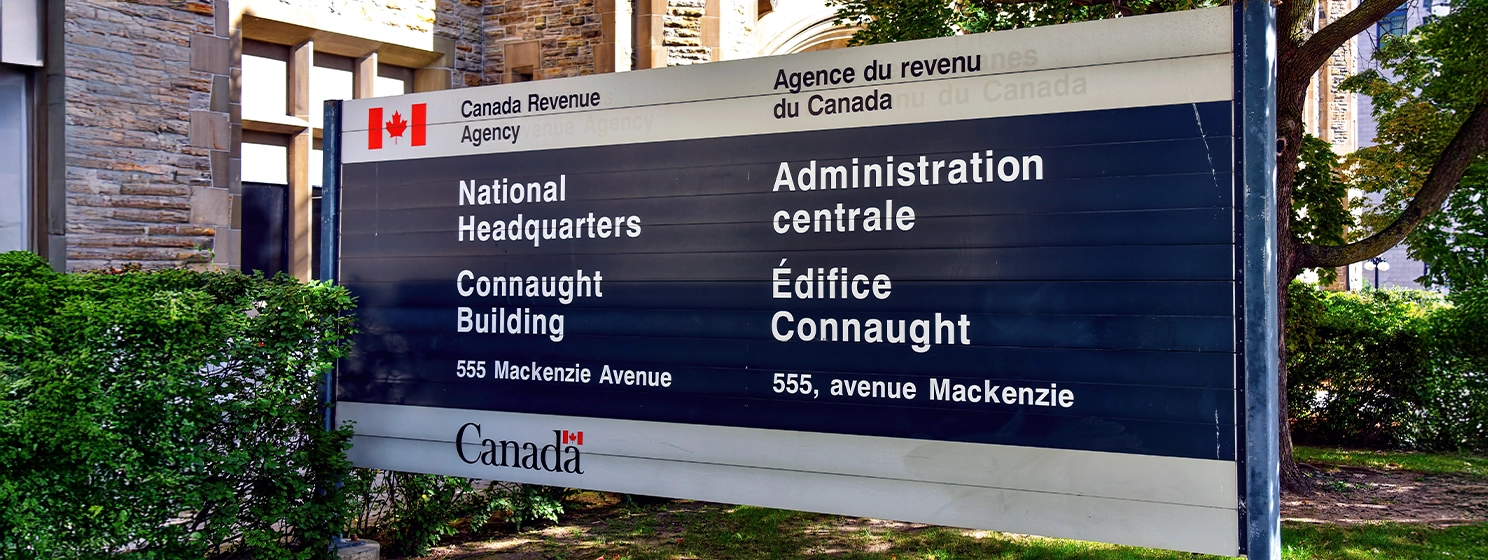
The Canadian Revenue Agency (CRA), the country’s top tax authority, has revealed that up to 40% of taxpayers who use digital asset platforms are either evading taxes or are at high risk of non-compliance.
According to a report from local outlet The Canadian Press, a team of 35 CRA “cryptoasset auditors” uncovered CAD$100 million (US$72 million) in unpaid taxes over the last three years, after working on more than 230 files. As a result, the tax agency concluded that up to 40% of Canadian taxpayers who use digital asset platforms may be evading taxes—intentionally or otherwise.
Despite these concerning statistics, no criminal charges have been lodged since 2020, with the CRA acknowledging the legal limitations in Canada. It reportedly told The Canadian Press that “there is no way to reliably identify taxpayers operating in the crypto space and assess compliance.”
For this reason, the CRA recently obtained a court order for data on 2,500 users from Vancouver-based digital asset firm Dapper Labs. The tax agency initially sought information on Dapper’s top 18,000 users but settled for 2,500 following negotiations with company officials and lawyers, based on reports.
The CRA’s September Federal Court application was only the second time a Canadian court had ordered such a disclosure from a digital asset firm, following a similar order issued to Toronto-based exchange Coinsquare in 2020.
After months of negotiations with the tax authority, in March 2021, Coinsquare announced an agreement with the CRA that saw it provide the agency with information on accounts valued at CAD$20,000 (US$14449) or more on December 31 in the years 2014 through 2020, including 16,500 of the largest client accounts by trading volume during those periods.
However, according to the company, this deal represented only a portion of the data the CRA initially requested.
“Instead of providing the CRA with all client data dating back to 2013 as was initially requested, Coinsquare and the CRA have agreed that information relating to 90-95% of our clients will not be disclosed,” said the company.
It added that, “we expect that similar disclosures will soon be required from other Canadian digital asset exchanges.”This prediction proved accurate, as by May 2024, the National Post reported that the CRA had roughly 400 ongoing audits or examinations related to crypto assets, on top of CAD$54 million (US$39 million) that the agency said it reassessed in suspected unpaid taxes related to undeclared cryptocurrency transactions in the fiscal year 2023-2024.
Crypto tax reporting has been at the forefront of minds lately, in part thanks to the Organisation for Economic Co-operation and Development (OECD), a global institution that promotes policies to improve international trade and economic progress, publishing a report earlier this month on the implementation of its global crypto tax reporting standards.
The OECD stated that 75 jurisdictions have now committed to its Crypto-Asset Reporting Framework (CARF), including “the vast majority” of digital asset centers.
As of November 2024, Canada was one of these 75 names signed up to the CARF, which may help explain its increasing focus on tax compliance from digital asset firms and those that use them.
Watch: How can startups retain innovation while abiding by regulations?
Recommended for you